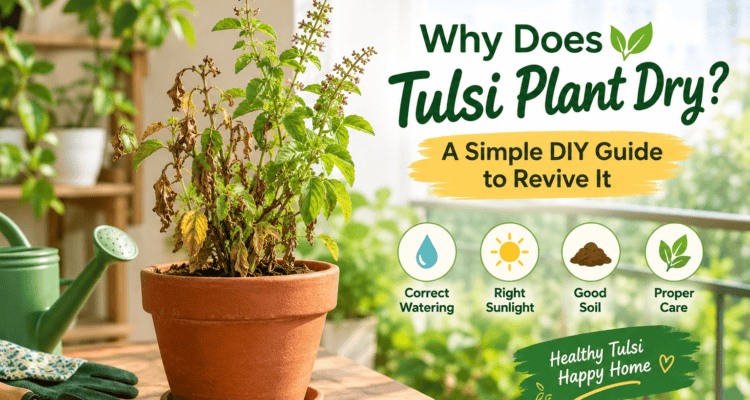
Tulsi is a holy plant in most Indian homes. But why does tulsi plant dry ? It is also one of the most loved Vastu plants for the home. We keep it in our balcony, terrace, or near the main door. But many people ask one common question: “Why does my Tulsi plant dry so fast?”
If your Tulsi is turning brown, dropping leaves, or looking weak, don’t worry. In this simple DIY guide, we will look at the real reasons behind a drying Tulsi plant and how you can bring it back to life using easy home methods.
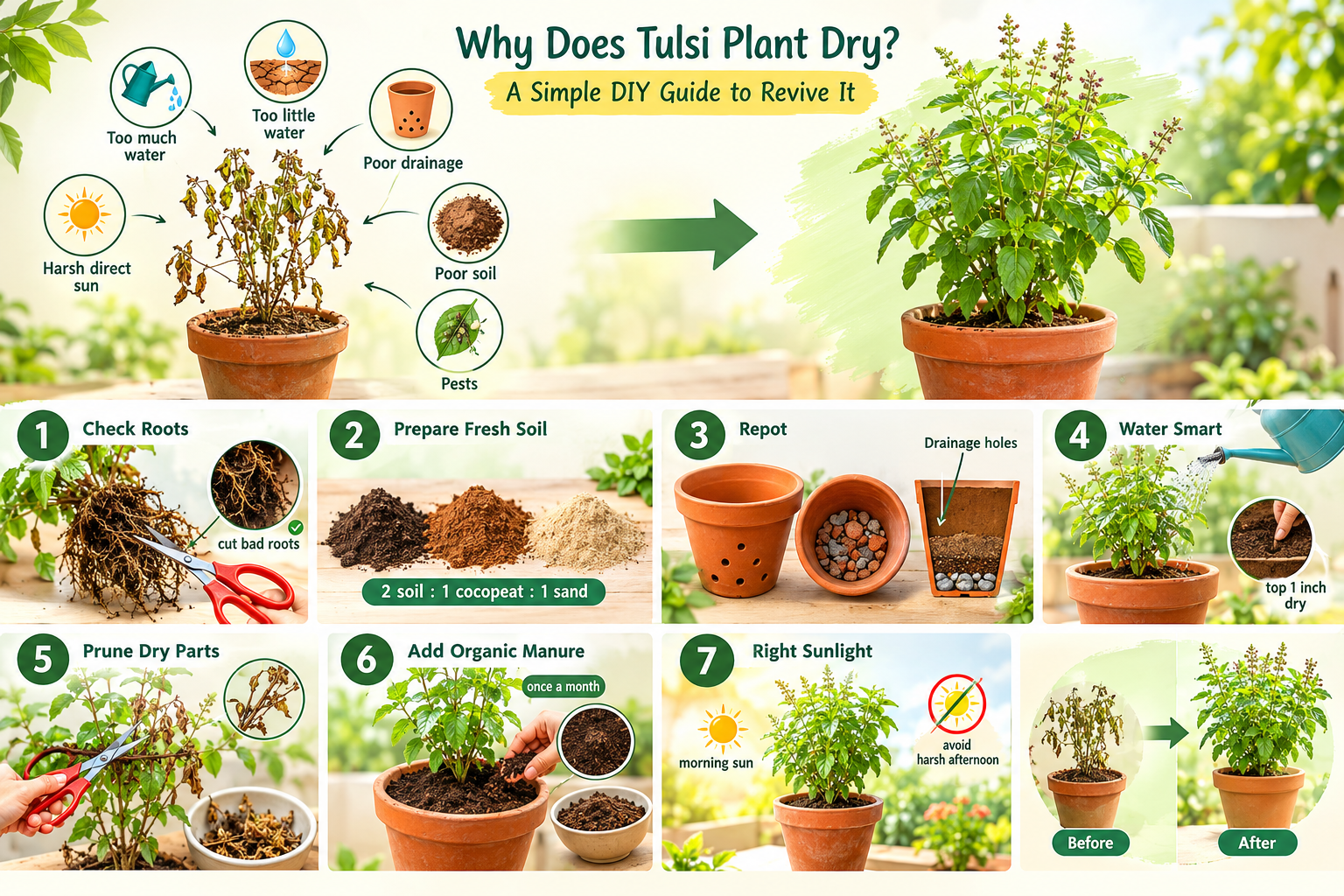
Common Reasons Why Tulsi Plant Dries Up
1. Too Much Water
Tulsi does not like wet, soggy soil. If you water it every day without checking the soil, the roots start to rot. Once roots rot, the plant cannot take up water or food, and the leaves dry out.
DIY Check: Put your finger 1 inch into the soil. If it feels wet, skip watering for a day or two. If you already see black, smelly roots, read our detailed Fungus & Root Rot Treatment guide for Mumbai’s humid climate for a full recovery plan.
2. Too Little Water
On the other hand, if you forget to water for many days, especially in Mumbai’s hot summer, the plant dries out fast. Tulsi likes soil that is a little moist, not fully dry and not fully wet.
3. Wrong Pot Drainage
Many pots sold in local nurseries have only one small hole at the bottom. This is not enough. Extra water sits inside the pot and slowly kills the roots.
DIY Fix: Add 2-3 more holes at the bottom of the pot using a hot nail or drill. Also add a layer of small stones or broken bricks before adding soil. If your terrace or balcony pots keep collecting extra water, check our guide on stopping waterlogging in a Mumbai terrace garden.
4. Direct Hot Sun For Too Long
Tulsi loves sunlight, but too many hours of direct hot sun, especially in April and May, can burn the leaves and dry the plant fast.
DIY Fix: Give Tulsi 4-6 hours of morning sun. Move the pot to a shaded spot during the harsh afternoon sun. For more placement ideas, see our private terrace garden ideas for Mumbai, Navi Mumbai and Thane residents.
5. Poor Soil Quality
If the soil is hard, old, or does not drain well, roots cannot breathe. This slowly weakens the plant, and it starts to dry from the top. Our Best Soil Mix for Indoor Plants in Mumbai guide covers the right mix for different plants, including Tulsi.
6. Pest Attack
Sometimes tiny pests like aphids or mealybugs attack the plant. This makes leaves curl, turn yellow, and dry up.
DIY Check: Look under the leaves. If you see small white or green bugs, that is the problem. Follow our 7 DIY methods to get rid of mealybugs naturally to treat it without harsh chemicals, or browse safe pest and insect control products for a ready-made solution.
Step-By-Step DIY Guide To Revive A Drying Tulsi Plant
Step 1: Check The Roots
Gently take the plant out of the pot. If roots are black and smell bad, that means root rot. Cut away the black roots with a clean scissor.
Step 2: Change The Soil Mix
Make a fresh mix at home:
- 2 parts garden soil
- 1 part cocopeat or dry leaves compost
- 1 part sand (for drainage)
This mix lets extra water drain out fast and keeps roots healthy. You can also pick a ready-made mix from our Fertilizers & Soil range if you want a quicker option.
Step 3: Re-Pot The Plant Correctly
Choose a pot with good drainage holes. Add a layer of stones at the bottom before adding the soil mix. This stops water from sitting at the bottom.
Step 4: Water The Right Way
Water only when the top 1 inch of soil feels dry. In Mumbai’s humid weather, this may mean watering every 2-3 days instead of daily.
Step 5: Cut The Dry Parts
Use clean scissors to cut all fully dry, brown branches and leaves. This helps the plant use its energy on new, healthy growth instead of dead parts. Good pruning shears from our Tools & Equipment collection make this job much easier.
Step 6: Feed It Naturally
Once a month, add a small amount of homemade compost or cow dung manure around the base of the plant. Avoid strong chemical fertilizers, especially for a plant used in daily worship.
Step 7: Give It The Right Sunlight Spot
Place the pot where it gets soft morning sun. If your balcony gets very hot afternoon sun, move the pot or use a light cloth shade for a few hours.
Simple Tips To Keep Tulsi Healthy Long-Term
- Never let the pot sit in a water tray for a long time
- Pinch off the top growth sometimes to keep the plant bushy, not tall and weak
- Keep checking the underside of leaves for pests every week
- Avoid keeping Tulsi in a fully closed room with no air flow
Final Thoughts
A drying Tulsi plant is not the end. Most of the time, the reason is simple — wrong watering, bad drainage, or too much harsh sun. With a little care and these easy DIY steps, your Tulsi plant can become green and healthy again in a few weeks.
Since Tulsi is also grown for its Vastu benefits, keeping it healthy matters even more. If you found this guide helpful, keep following Farmer In Mumbai for more simple DIY guides made for small balconies, terraces, and Mumbai homes.

Akhilesh Maurya
Administrator at Farmer In Mumbai
- 15 Best Microgreens To Grow At Home In Your Balcony : A DIY guide
- How to Start an Areca Leaf Plate Making Business in India (2026 Guide)
- 12 Indoor Vastu Plants for Home in Mumbai With Direction And Pot Guide
- 10 Private Terrace Garden Ideas For Mumbai, Navi Mumbai And Thane Residents With Rules And Regulations
- How to Make Self Watering Pots at Home : 3 Easy DIY Methods
- How To Use Cocopeat For Plants : A Complete DIY Guide
- Balcony Garden Rules And Regulations In Mumbai Housing Societies
- Compost Bin For Kitchen Waste And Garden : A DIY Guide to Make, Buy and Use It
- Laid Off or Burned Out? 6 Small Garden Business Ideas You Can Start For Under ₹15,000
- Get Pesticide Free Vegetables Near Me in Mumbai: How to Verify Before You Buy
- 7 DIY Methods To Get Rid Of Mealybugs On Plants Naturally
- 10 Plants For North Facing Balcony In Mumbai, Thane And Navi Mumbai High Rise Buildings