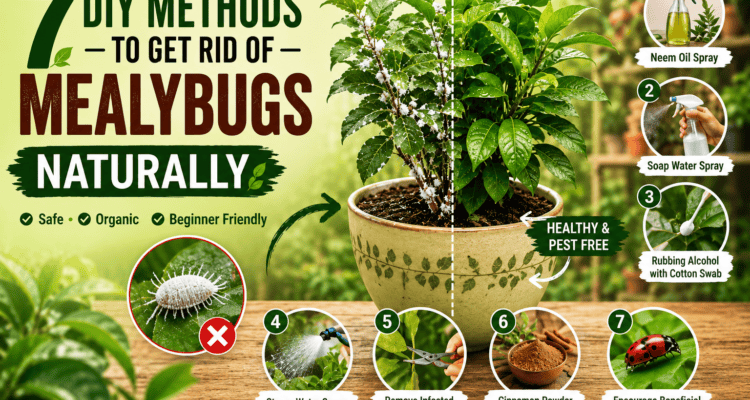
You will learn 7 DIY methods to get rid of mealybugs on plants naturally. If you’ve spotted little white, cottony clumps hiding in the leaf joints of your money plant or snake plant, you’re not imagining things — you have mealybugs. If you’re gardening in Mumbai, Thane, or Navi Mumbai, you’ve picked one of the toughest cities in India to keep them away. Our humidity, warm year-round temperatures, and crowded balcony gardens are exactly the conditions mealybugs love.
The good news: you don’t need harsh chemical pesticides to fight them off. Almost everything you need is already sitting in your kitchen cabinet or at the corner medical store. This guide covers which indoor plants mealybugs target most, and exactly how to get rid of them using natural, DIY methods with materials easily available in Mumbai homes.
What Are Mealybugs and Why Do Mumbai Homes Get Them So Often?
Mealybugs are small, soft-bodied insects covered in a white, waxy, cotton-like coating. They cluster in leaf axils (where the leaf meets the stem), under leaves, and along new growth, sucking sap from the plant. Left untreated, they cause yellowing leaves, sticky residue (called honeydew) on leaves and floors, and eventually stunted or dying growth.
Three things make our region a mealybug hotspot:
- High humidity almost all year, especially during monsoon and the humid months before it — the same conditions that also cause fungal issues and root rot in Mumbai’s humid climate, another common headache for local gardeners.
- Enclosed balconies and grilled windows in high-rise buildings across Mumbai, Thane, and Navi Mumbai reduce airflow, letting pests settle in undisturbed.
- Overcrowded pots — a common issue in small Mumbai flats where every inch of balcony space is used, means an infestation on one plant spreads fast to its neighbours.
If you’re new to identifying pest and disease symptoms, it’s also worth reading our guide on monsoon gardening mistakes to avoid, since overwatering and poor drainage often show up alongside pest problems during the rains.
Common Indoor Plants Affected by Mealybugs in Mumbai Homes
Mealybugs aren’t picky, but some indoor plants — very popular in Mumbai apartments — are especially prone to infestation. Here’s what to watch closely:
1. Money Plant (Pothos)
The most common indoor plant in Indian homes is also one of the most mealybug-prone, especially when grown in water or in low-airflow corners. Check the vine joints and the underside of leaves regularly. If you’re growing it for Vastu purposes, our guide on Indoor Vastu plants for Mumbai homes covers direction and pot placement tips that also improve airflow around the plant.
2. Snake Plant (Sansevieria)
Despite being nearly indestructible, snake plants collect mealybugs at the base of the leaves where they meet the soil. Because the leaves are thick and upright, infestations can go unnoticed for weeks.
3. Peace Lily
Peace lilies are especially vulnerable when kept in low light with reduced air circulation — a common setup in Mumbai bedrooms and bathrooms. Look for cottony patches where leaf stems emerge from the soil.
4. ZZ Plant
The tightly packed stems of a ZZ plant are a favourite hiding spot. Mealybugs often go undetected here until the infestation is advanced, since the glossy leaves hide early damage well.
5. Jade Plant and Other Succulents
Succulents store water in their leaves, which mealybugs find irresistible. If your jade plant, echeveria, or string of pearls is on a west-facing Mumbai balcony that gets baked in the afternoon sun and then soaked in monsoon rain, it’s under extra stress — and stressed plants attract pests faster.
6. Croton
The colourful, dense foliage of croton plants — popular in Navi Mumbai society gardens and balconies — provides excellent cover for mealybugs, particularly along the midrib on the underside of leaves.
7. Areca Palm
Areca palms kept indoors for air purification are frequent mealybug hosts, especially in the leaf sheaths near the base of each frond.
If your indoor plant collection leans toward air-purifying varieties, our post on indoor plants for air purification lists several of these — worth a read if you want to know which of your plants are naturally more pest-resistant.
How to Get Rid of Mealybugs Naturally — Step-by-Step DIY Methods
Here are the most effective natural treatments, using items you likely already have at home or can pick up easily from a local kirana store, medical shop, or nursery in Mumbai, Thane, or Navi Mumbai.
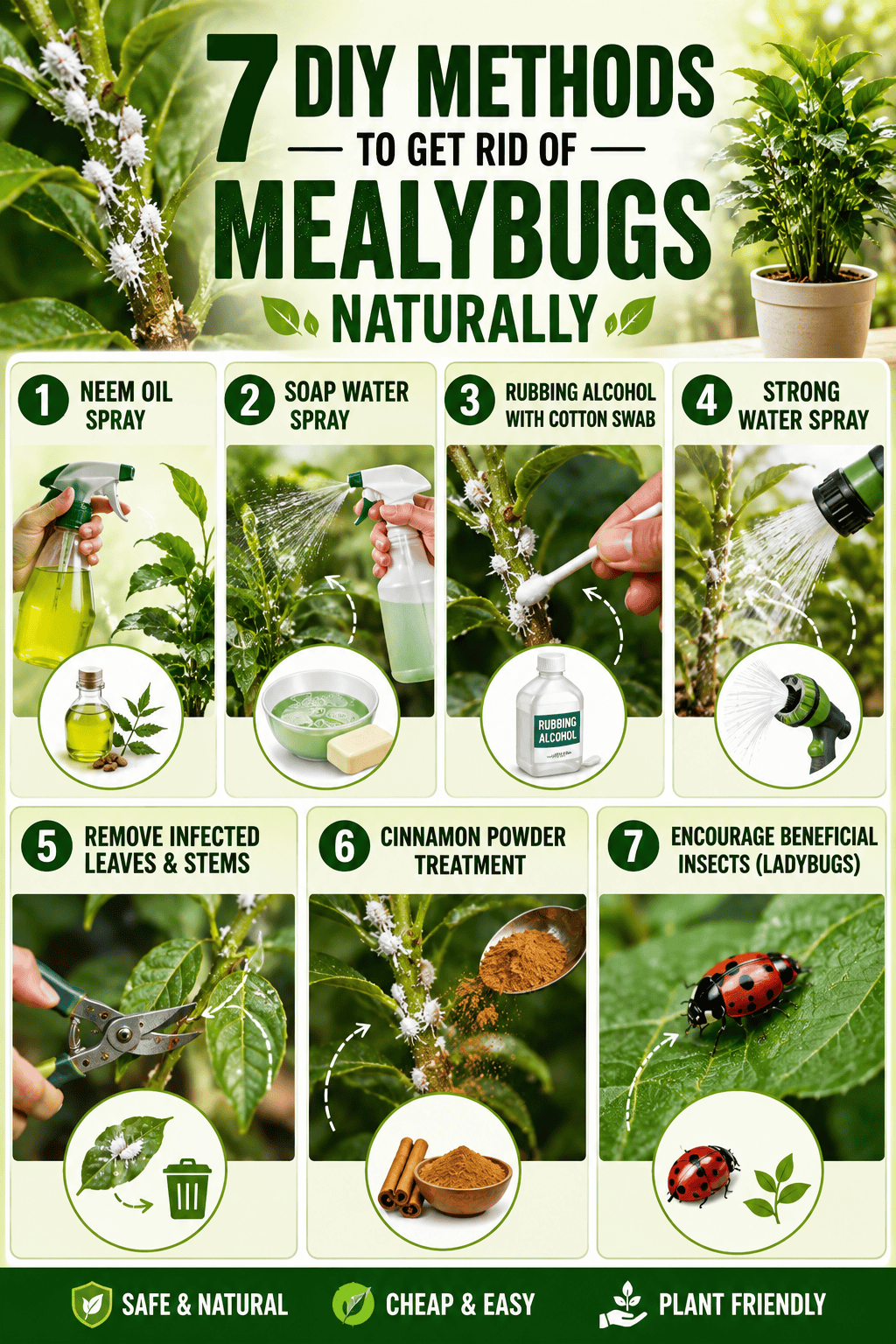
Method 1: Isopropyl (Rubbing) Alcohol Spot Treatment
This is the fastest way to kill mealybugs on contact.
You’ll need: Cotton buds or a cotton ball, isopropyl alcohol (available at any medical/chemist shop as “rubbing alcohol” or surgical spirit, roughly 70% concentration).
How to do it:
- Dip a cotton bud directly in the alcohol.
- Dab it directly onto each visible mealybug and cottony cluster — the alcohol dissolves their waxy coating and kills them within seconds.
- Repeat every 2–3 days for two weeks to catch newly hatched bugs.
This method works well for light infestations on snake plants, ZZ plants, and jade plants where you can see individual clusters clearly.
Method 2: Neem Oil Spray
Neem oil is one of the most reliable organic pesticides, and it’s widely available across Mumbai — from local nurseries to Amazon.
You’ll need: Neem oil, a few drops of mild liquid dish soap (like Vim or Pril), water, a spray bottle.
How to do it:
- Mix 1 teaspoon of neem oil with 1 teaspoon of dish soap into 1 litre of water. The soap helps the oil emulsify so it sticks to the leaves.
- Shake well and spray thoroughly, focusing on leaf undersides, joints, and stem bases.
- Apply in the early morning or evening, never in direct harsh sun, to avoid leaf burn.
- Repeat every 5–7 days for 3–4 weeks.
Neem oil also helps deter other common balcony pests, which is especially useful during Mumbai’s monsoon pest season — see our detailed breakdown in Mumbai pest control for monsoon balconies.
Method 3: Soap Water Spray
A gentler option, good for sensitive plants like peace lilies and crotons.
You’ll need: 1–2 teaspoons of mild liquid dish soap, 1 litre of water, spray bottle.
How to do it:
- Mix well and spray directly on affected areas.
- Let it sit for 15–20 minutes, then rinse the plant with plain water to prevent soap residue from clogging leaf pores.
- Repeat twice a week until the infestation clears.
Method 4: Diluted Buttermilk (Chaas) Spray
A traditional Indian home remedy that many Mumbai terrace gardeners swear by, particularly for outdoor and semi-outdoor plants.
You’ll need: Sour buttermilk (chaas), water.
How to do it:
- Dilute buttermilk with water in a 1:4 ratio.
- Let the mixture sit for 2–3 days to ferment slightly — this increases its effectiveness.
- Spray on affected plants once a week. The mild acidity disrupts the mealybugs’ waxy coating.
Method 5: Garlic and Green Chilli Spray
Easy to make from ordinary kitchen ingredients.
You’ll need: 4–5 garlic cloves, 2–3 green chillies, 1 litre water.
How to do it:
- Crush the garlic and chillies and soak in water overnight.
- Strain the liquid into a spray bottle.
- Spray directly on infested areas every 4–5 days. The sulphur compounds in garlic and capsaicin in chillies repel and kill soft-bodied pests like mealybugs.
Method 6: Neem Cake (Khal) Soil Treatment
For infestations that keep returning from the soil itself — common with money plant and areca palm — treat the root zone, not just the leaves.
You’ll need: Neem cake powder (neem khal), widely sold at Mumbai nurseries and garden stores.
How to do it:
- Mix a tablespoon of neem cake into the top layer of soil around the plant.
- Water lightly so it releases its compounds gradually.
- Repeat once a month as a preventive measure, not just during an active infestation.
If you’re unsure which soil type your plant needs alongside this treatment, our plant-by-plant soil mix guide for Mumbai indoor plants covers snake plant, money plant, peace lily, and jade plant soil requirements in detail — healthier soil means a plant that resists pests better.
Method 7: Isolate and Prune
Regardless of which spray method you use, always:
- Move the infested plant away from other plants immediately — mealybugs travel between pots easily, especially in the tightly packed balcony setups typical of Mumbai and Thane flats.
- Prune off heavily infested leaves or stems and dispose of them in a sealed bag, not your compost bin, to avoid reinfestation.
Prevention Tips for Mumbai, Thane & Navi Mumbai Homes
- Quarantine new plants for 1–2 weeks before placing them near your existing collection — a large share of mealybug infestations start with a new plant bought from a nursery or market. Our guide to Mumbai’s best plant nurseries is a good starting point if you want to know which sellers maintain healthier stock.
- Improve airflow between pots — don’t crowd plants together on narrow balconies, even if space is tight.
- Wipe leaves regularly with a damp cloth, especially glossy-leaved plants like croton and jade, since dust buildup can mask early mealybug clusters.
- Avoid overwatering, particularly during monsoon — soggy soil stresses roots and makes plants more vulnerable to both pests and root rot. Check our monsoon gardening mistakes guide for more on this.
- Inspect weekly, focusing on leaf joints, undersides, and new growth — the earlier you catch mealybugs, the easier they are to remove with natural methods alone.
When to Call in Professional Help
If natural methods aren’t keeping up with the infestation — or you simply don’t have the time to treat multiple plants weekly — a professional garden maintenance service can help with regular inspection, treatment, and preventive care. This is especially useful for society gardens and larger balcony collections across Mumbai, Navi Mumbai, and Thane. You can reach out through our garden maintenance services page for more details.
FAQs: Mealybugs on Indoor Plants
Do mealybugs spread to other plants?
Yes, quickly. They crawl between touching leaves and pots, and can also be carried on hands, tools, or clothing. Always isolate an infested plant.
Can mealybugs come back after treatment?
Yes — mealybug eggs are resistant to many treatments, so a single spray usually isn’t enough. Repeat natural treatments every 5–7 days for at least 3–4 weeks to catch newly hatched insects.
Are neem oil and alcohol sprays safe for edible plants?
Yes, both are commonly used on vegetable and herb plants, but always rinse leaves thoroughly with plain water before harvesting.
Why do I keep getting mealybugs even after cleaning my plants?
Check the soil and pot rim, not just the leaves — mealybugs often hide at the base of the plant and in soil crevices, which is why a neem cake soil treatment alongside leaf spraying works better than spraying alone.
Looking for neem oil, insecticidal soap, or other natural pest-control essentials? Browse our curated Pest & Insect Control picks in the Farmer In Mumbai shop.

Akhilesh Maurya
Administrator at Farmer In Mumbai
- 15 Best Microgreens To Grow At Home In Your Balcony : A DIY guide
- How to Start an Areca Leaf Plate Making Business in India (2026 Guide)
- 12 Indoor Vastu Plants for Home in Mumbai With Direction And Pot Guide
- 10 Private Terrace Garden Ideas For Mumbai, Navi Mumbai And Thane Residents With Rules And Regulations
- How to Make Self Watering Pots at Home : 3 Easy DIY Methods
- How To Use Cocopeat For Plants : A Complete DIY Guide
- Balcony Garden Rules And Regulations In Mumbai Housing Societies
- Compost Bin For Kitchen Waste And Garden : A DIY Guide to Make, Buy and Use It
- Laid Off or Burned Out? 6 Small Garden Business Ideas You Can Start For Under ₹15,000
- Get Pesticide Free Vegetables Near Me in Mumbai: How to Verify Before You Buy
- 10 Plants For North Facing Balcony In Mumbai, Thane And Navi Mumbai High Rise Buildings
- Best Soil Mix for Indoor Plants in Mumbai: A Plant-by-Plant Guide