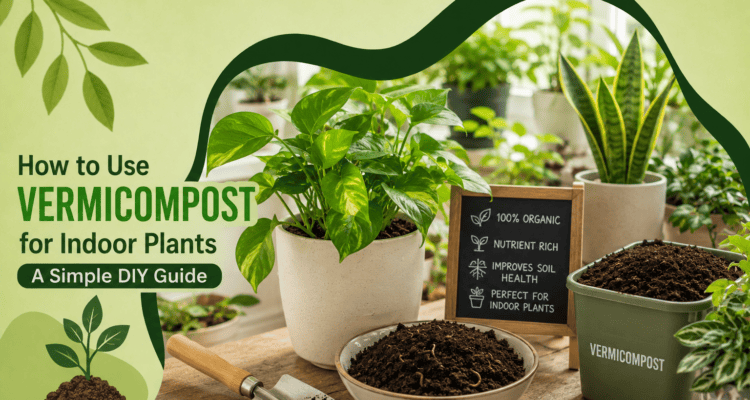
How To Use Vermicompost For Indoor Plants ? Vermicompost is one of the easiest and safest ways to feed your plants naturally. It is made by earthworms breaking down organic waste into rich, dark, soil-like manure. Unlike chemical fertilizers, you cannot really overdose your plants with it, which makes it perfect for beginners. Here is a simple guide on how to use it the right way.
What Is Vermicompost?
Vermicompost is compost made using earthworms. The worms eat kitchen waste, dry leaves, and other organic matter, and their waste (called castings) becomes a nutrient-rich, crumbly, dark brown material that smells like fresh soil, not like waste.
It contains a good mix of nitrogen, phosphorus, potassium, and useful microorganisms that improve soil health over time — not just feed the plant, but improve the soil itself.
Why Use Vermicompost Instead of Only Chemical Fertilizer
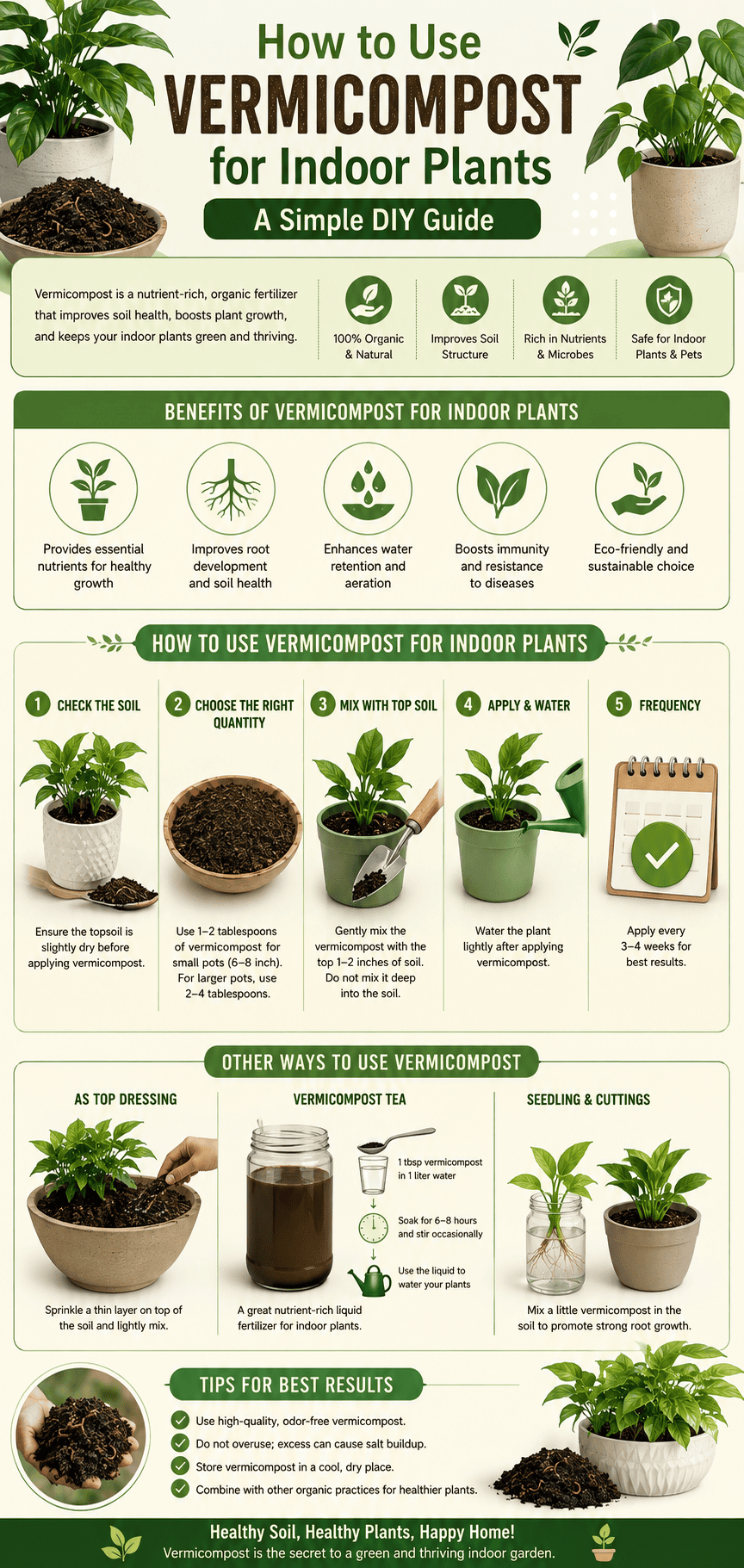
- It improves soil texture, so soil holds water and air better
- It releases nutrients slowly, so there is very little risk of burning roots
- It adds good bacteria and microbes to the soil
- It is safe for children and pets to be around
- It works well for vegetables, flowers, and indoor plants alike
Many gardeners use vermicompost as the base feed, and something like NPK fertilizer as an extra boost during heavy growing or flowering season.
How to Use Vermicompost: Step-by-Step
Step 1: Choose Good Quality Vermicompost
Good vermicompost should be:
- Dark brown or black in colour
- Crumbly, not wet and sticky, and not too dry and dusty
- Smell like earth, not like rotting waste
If it smells bad, it is not fully processed yet.
Step 2: Decide How You Will Use It
There are three simple ways to use vermicompost:
- Mixing into potting soil (best for new plants or repotting)
- Top dressing (adding a layer on top of soil for existing plants)
- Making a liquid feed (vermicompost tea)
Step 3A: Mixing into Potting Soil
When planting a new plant or repotting an old one:
- Mix vermicompost with regular potting soil in a ratio of 1 part vermicompost to 4 parts soil
- For very small pots, 1 part vermicompost to 5 or 6 parts soil is enough
- Mix well before filling the pot, so the compost is spread evenly
Step 3B: Top Dressing for Existing Plants
For plants that are already growing well and you don’t want to disturb the roots:
- Add a 1 to 2 inch layer of vermicompost on top of the soil, around the base of the plant
- Avoid piling it directly against the stem
- Water lightly after adding, so nutrients slowly move down into the soil
- Repeat this once every 3 to 4 weeks
Step 3C: Making Vermicompost Tea (Liquid Feed)
This is a quick way to feed plants that need a fast boost:
- Take a handful of vermicompost and put it in a cloth bag or old sock
- Soak it in a bucket of water for 24 to 48 hours
- Stir occasionally
- Remove the bag, and use the brown liquid to water your plants
- You can use this every 2 weeks for indoor and balcony plants
When to Use Vermicompost
- At the time of planting a sapling or seed
- When repotting a plant into a bigger container
- Every month as a regular top dressing for maintenance
- Before the monsoon and before the Rabi (winter) sowing season, to prepare soil in advance
Common Mistakes to Avoid
- Using too little soil mix: vermicompost alone is too rich and can hold too much moisture, always mix it with soil
- Keeping it too wet: store dry vermicompost in a cool, shaded place, not in direct sun or rain
- Using unfinished compost: if it still smells like kitchen waste, let it process longer before using
- Expecting instant results: vermicompost works slowly and steadily, not overnight like chemical fertilizer
A Simple Monthly Routine for Mumbai Balcony Gardens
- Week 1: Top dress with a thin layer of vermicompost
- Week 2: Water normally, observe plant health
- Week 3: Use vermicompost tea as a liquid feed
- Week 4: Light watering, check soil moisture before next month’s top dressing
This routine keeps your soil healthy and full of natural nutrients all year round, with very little risk of damaging your plants.
Where to Buy
You can find good quality, ready-to-use vermicompost, potting soil, and grow bags on our shop page: Shop Vermicompost & Organic Fertilizers

Akhilesh Maurya
Administrator at Farmer In Mumbai
- 15 Best Microgreens To Grow At Home In Your Balcony : A DIY guide
- How to Start an Areca Leaf Plate Making Business in India (2026 Guide)
- 12 Indoor Vastu Plants for Home in Mumbai With Direction And Pot Guide
- 10 Private Terrace Garden Ideas For Mumbai, Navi Mumbai And Thane Residents With Rules And Regulations
- How to Make Self Watering Pots at Home : 3 Easy DIY Methods
- How To Use Cocopeat For Plants : A Complete DIY Guide
- Balcony Garden Rules And Regulations In Mumbai Housing Societies
- Compost Bin For Kitchen Waste And Garden : A DIY Guide to Make, Buy and Use It
- Laid Off or Burned Out? 6 Small Garden Business Ideas You Can Start For Under ₹15,000
- Get Pesticide Free Vegetables Near Me in Mumbai: How to Verify Before You Buy
- 7 DIY Methods To Get Rid Of Mealybugs On Plants Naturally
- 10 Plants For North Facing Balcony In Mumbai, Thane And Navi Mumbai High Rise Buildings