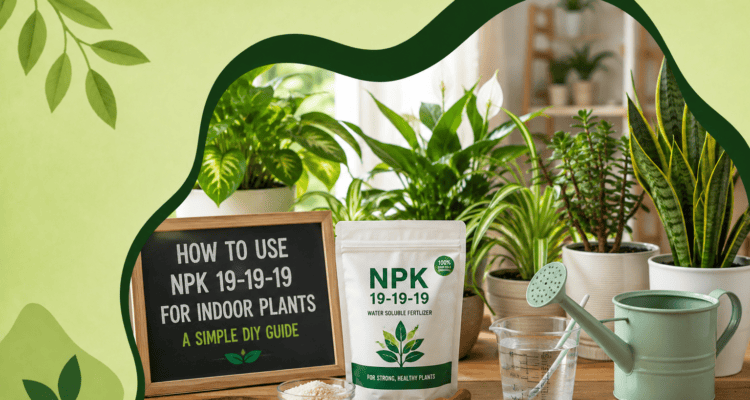
How To Use NPK 19 19 19 For Indoor Plants ? If you have ever picked up a fertilizer bag and seen three numbers like “19-19-19” on it, you may have wondered what they mean. Don’t worry, it is simple once you understand it. In this guide, I will explain what NPK 19-19-19 is, how to use it, and how much to give your plants — in plain, easy words.
What Does NPK 19-19-19 Mean?
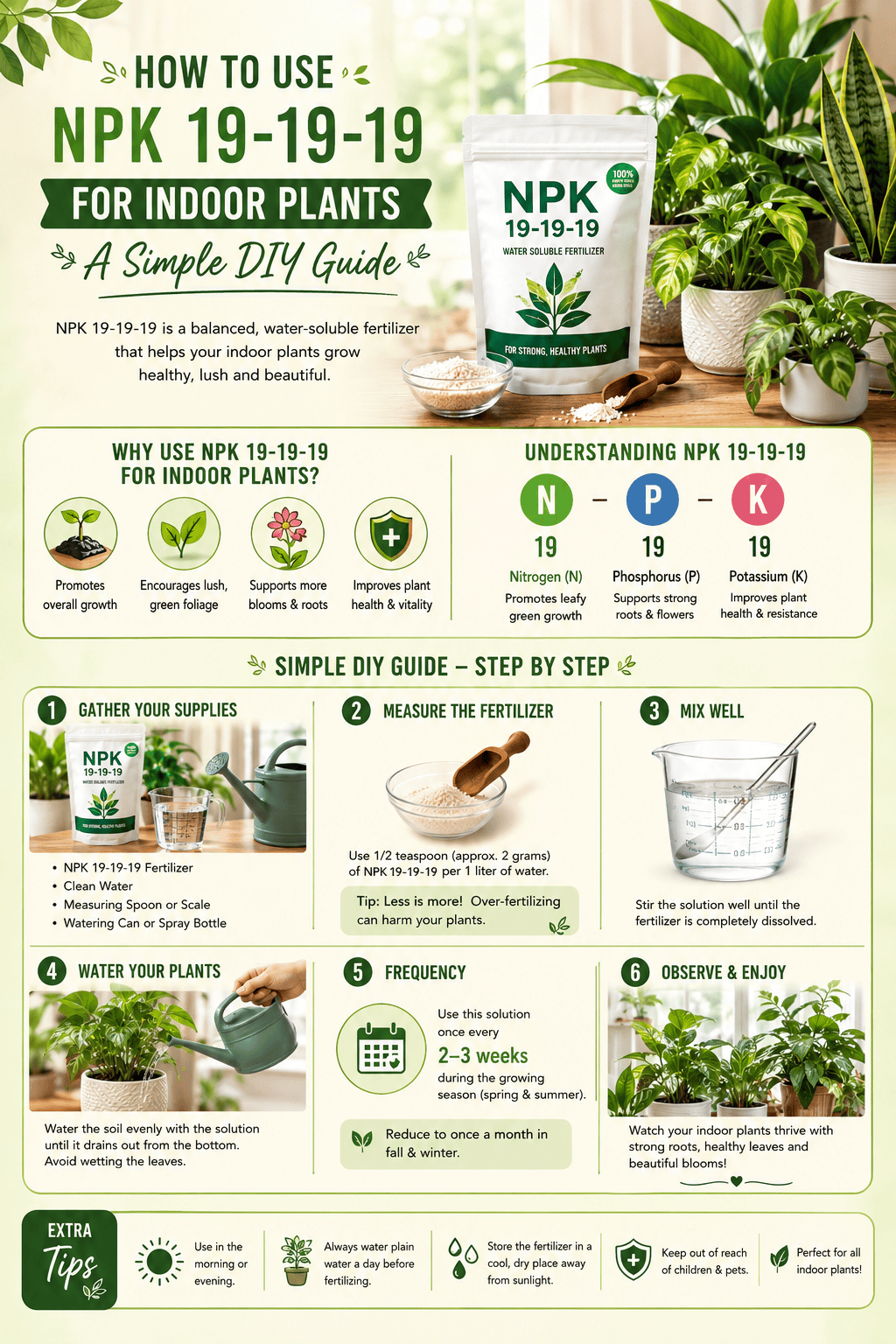
NPK stands for three nutrients that every plant needs:
- N — Nitrogen: helps leaves grow green and strong
- P — Phosphorus: helps roots and flowers grow well
- K — Potassium: helps the overall health and strength of the plant
The numbers 19-19-19 mean the fertilizer has 19% nitrogen, 19% phosphorus, and 19% potassium. Since all three numbers are equal, this is called a balanced fertilizer. It is a good all-round choice if you are not sure what your plant needs.
When Should You Use NPK 19-19-19?
This fertilizer works well for:
- Vegetable plants like tomato, chilli, and brinjal
- Flowering plants like marigold, rose, and hibiscus
- Indoor plants that need a general nutrient boost
- The early growing stage of most plants, when they need balanced growth
It is not the best choice for a plant that is only flowering or fruiting, since at that stage plants often need more phosphorus and potassium than nitrogen. But for regular monthly feeding, 19-19-19 works fine for almost all home garden plants.
How to Use NPK 19-19-19: Step-by-Step
Step 1: Check the Form You Have
NPK 19-19-19 comes in two forms:
- Powder or crystal form — you dissolve it in water
- Granules — you can also dissolve them, or sprinkle directly on soil
Most home gardeners find the water-soluble form easier to control.
Step 2: Measure the Right Amount
A simple and safe rule for home plants:
- 1 gram of NPK 19-19-19 per litre of water for a normal feed
- For small pots (under 12 inches), use half a teaspoon in 1 litre of water
- For bigger pots or grow bags, use 1 full teaspoon in 2 litres of water
Do not guess by eye. Too much fertilizer can burn plant roots, so always measure with a spoon rather than pouring loosely.
Step 3: Mix It Properly
Add the fertilizer to water, not water to fertilizer. Stir well until it fully dissolves. There should be no powder left floating or settled at the bottom.
Step 4: Water the Plant Normally First
Before applying the fertilizer mix, water your plant with plain water first if the soil is completely dry. This prevents root burn. Never apply fertilizer to bone-dry soil.
Step 5: Apply the Fertilizer Mix
Pour the dissolved fertilizer slowly around the base of the plant, avoiding the leaves and stem. For indoor plants, you can also use a small watering can with a narrow spout for control.
Step 6: Repeat on a Schedule
- Every 15 days for actively growing plants in the monsoon and Rabi (winter) season
- Once a month for slow-growing or resting plants
- Stop or reduce feeding in peak summer heat, when plant growth naturally slows down
Common Mistakes to Avoid
- Using too much: more fertilizer does not mean faster growth, it can damage roots
- Applying on dry soil: always water first, feed second
- Feeding sick or stressed plants: wait until the plant recovers before fertilizing
- Spraying on leaves in direct sun: this can cause leaf burn, feed early morning or evening instead
A Simple Monthly Routine for Mumbai Balcony Gardens
- Week 1: Feed with NPK 19-19-19 (1g per litre)
- Week 2: Plain water only, check for pests
- Week 3: Feed with NPK 19-19-19 again
- Week 4: Add a layer of compost or vermicompost on top of the soil for slow-release nutrition
This routine keeps a good balance between quick nutrients (NPK) and long-term soil health (organic compost).
Where to Buy
You can find good quality, tested NPK 19-19-19 fertilizer packs, measuring spoons, and watering cans on our shop page: Shop NPK 19-19-19 Fertilizer

Akhilesh Maurya
Administrator at Farmer In Mumbai
- 15 Best Microgreens To Grow At Home In Your Balcony : A DIY guide
- How to Start an Areca Leaf Plate Making Business in India (2026 Guide)
- 12 Indoor Vastu Plants for Home in Mumbai With Direction And Pot Guide
- 10 Private Terrace Garden Ideas For Mumbai, Navi Mumbai And Thane Residents With Rules And Regulations
- How to Make Self Watering Pots at Home : 3 Easy DIY Methods
- How To Use Cocopeat For Plants : A Complete DIY Guide
- Balcony Garden Rules And Regulations In Mumbai Housing Societies
- Compost Bin For Kitchen Waste And Garden : A DIY Guide to Make, Buy and Use It
- Laid Off or Burned Out? 6 Small Garden Business Ideas You Can Start For Under ₹15,000
- Get Pesticide Free Vegetables Near Me in Mumbai: How to Verify Before You Buy
- 7 DIY Methods To Get Rid Of Mealybugs On Plants Naturally
- 10 Plants For North Facing Balcony In Mumbai, Thane And Navi Mumbai High Rise Buildings