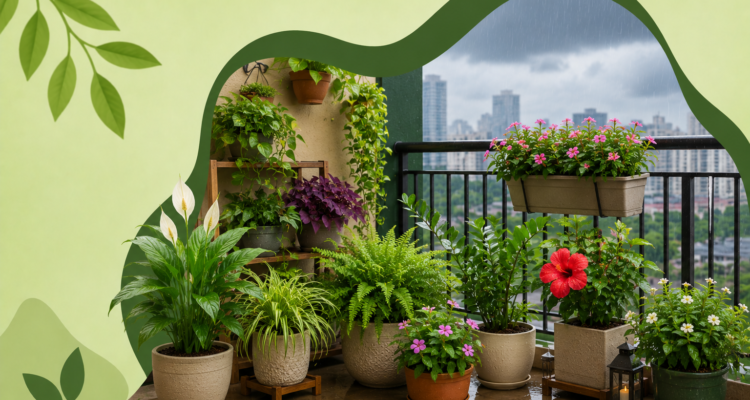
Mumbai doesn’t do gentle monsoon. So plants for mumbai monsoon should be strong to withstand Mumbai weather. We get 200mm in a single afternoon, humidity that sits at 90%+ for weeks, salt-laden sea wind if you’re anywhere near Bandra, Worli, or Marine Drive, and balconies on the 14th floor of a Powai tower that catch wind gusts strong enough to snap stems. Add waterlogged pots, root rot, fungal attacks, and mosquito breeding in trapped water, and you’ll see why the plant that survived beautifully in a Pune terrace garden video turns to mush on your Mahim balcony by mid-July.
This list is built specifically for Mumbai conditions — heavy, continuous rain; extreme humidity; wind exposure on high floors; and the pollution film that settles on leaves near main roads. These 12 plants aren’t just monsoon-tolerant on paper — they’re the ones actually seen surviving (and looking good) on real Mumbai balconies from Andheri to Chembur through July and August. Along the way, we’ve linked the actual potting mixes, fertilizers, and tools we’d actually use to keep them alive this season.
What “Monsoon-Proof” Actually Means in Mumbai
Before the list, a quick reality check on what you’re solving for:
- Waterlogging tolerance — can the roots handle standing water for hours during a downpour before your drainage catches up?
- Fungal and rot resistance — high humidity plus warmth is a breeding ground for fungus; some plants just don’t get affected
- Wind resistance — relevant if you’re above the 5th floor, especially in South Mumbai, Powai, or Thane creek-facing buildings
- Low sunlight tolerance — Mumbai skies stay overcast for weeks, so plants that demand 6 hours of direct sun will sulk
- Salt spray tolerance — a real factor within a few kilometers of the coast
Keep these five in mind and you’ll understand why each plant on this list works, not just that it works.
The 12 Plants
1. Money Plant (Epipremnum aureum)
The most forgiving plant for Mumbai monsoons, full stop. It tolerates overwatering, low light, and neglect equally well. Grow it in a pot with a moss stick or let it trail off a railing — either way, monsoon humidity actually accelerates its growth. Just make sure the pot has proper drainage holes and a base of well-draining organic potting soil mix; money plant tolerates wet soil but not a swamp.
2. Peace Lily (Spathiphyllum)
Peace lilies love humidity, making them one of the few flowering plants that genuinely enjoy Mumbai’s monsoon air. They prefer indirect light, which suits our overcast monsoon skies perfectly. Watch for yellowing leaves, though — a sign the pot is waterlogged and needs a lighter, better-draining medium like a cocopeat block mixed into the soil.
3. Snake Plant (Sansevieria)
Snake plant is usually marketed as a drought-tolerant plant, but it’s equally valuable in monsoon because its thick, waxy leaves resist fungal spotting far better than soft-leaved plants. The one rule: raise the pot slightly off the balcony floor on a plant stand so it never sits in a puddle after heavy rain.
4. Ferns (Boston Fern, Bird’s Nest Fern)
Ferns are practically designed for Mumbai’s monsoon — they want exactly this humidity and indirect light. Keep them in a spot that gets rain but not direct battering wind (a north or east-facing corner works well), since heavy gusts can shred their delicate fronds. A monthly dose of seaweed liquid fertilizer helps them push out fresh, undamaged fronds through the wet months.
5. Aglaonema (Chinese Evergreen)
A near-indestructible foliage plant that handles low light, high humidity, and inconsistent watering without complaint. It’s an excellent choice for balconies that get filtered light rather than direct sun, which describes most Mumbai apartments boxed in by neighboring towers. Feed it lightly with an organic liquid biofertilizer once the rains ease its growth spurt.
6. Croton
Crotons bring color (reds, yellows, oranges) to an otherwise green monsoon balcony and hold up well against rain if given a spot with partial sun between showers. They do need decent drainage — repot in a mix with cocopeat or coarse sand blended in so water doesn’t pool around the roots.
7. Bamboo Palm
A great option for wind-exposed high floors — its flexible stems bend rather than break in strong gusts, unlike stiffer ornamental plants. It also tolerates the low light of monsoon weeks and adds height and privacy to a balcony. Keep it elevated on a sturdy iron plant stand so runoff drains away instead of pooling at its base.
8. Tulsi (Holy Basil) — grown in a raised pot
Tulsi is a Mumbai balcony staple, but the monsoon version has one non-negotiable rule: never let it sit in standing water, or the roots rot within days. Grow it in a terracotta pot raised on a plant stand, with a drainage layer of broken pot shards (khapra) at the bottom. A sprinkle of neem cake powder into the soil also keeps fungus gnats and root pests away, which multiply fast in Tulsi pots during monsoon.
9. Adenium (Desert Rose) — with modified care
Not naturally a monsoon plant, but Mumbai gardeners have figured out the workaround: keep it under a covered ledge or shift it to a sheltered spot during the heaviest weeks, and it survives the season fine since it mainly needs protection from constant waterlogging rather than from humidity itself. Its thick caudex actually stores water reserves that help it cope with the erratic light — just make sure it’s potted in a fast-draining soil mix rather than regular garden soil.
10. Spider Plant (Chlorophytum)
Spider plant tolerates both overwatering and the sudden dry spells between monsoon showers, and its arching leaves shrug off rain damage that would mark up softer foliage. It also multiplies quickly in humid conditions, so one plant this June can become three or four by September — a sharp plant cutter makes separating the babies a lot cleaner.
11. Wandering Jew (Tradescantia zebrina)
A trailing plant with striking purple-and-silver leaves that genuinely thrives in Mumbai’s wet, humid balconies. It roots easily from cuttings too, so if a stem gets damaged in a storm, snip it clean with a plant cutter and propagate a new plant from it within weeks.
12. Ixora
For gardeners who miss flowers during monsoon, Ixora is one of the few flowering shrubs that keeps blooming through heavy rain in Mumbai, provided it gets a few hours of light between showers. It’s commonly seen thriving on society compound walls and ground-floor balconies across the city, which tells you it’s already monsoon-tested at scale. A monthly feed of water-soluble NPK fertilizer keeps the blooms coming even in low monsoon light.
Quick Care Reference
| Plant | Light Need | Watering in Monsoon | Wind Tolerance |
|---|---|---|---|
| Money Plant | Low–Indirect | Minimal extra | High |
| Peace Lily | Indirect | Minimal extra | Moderate |
| Snake Plant | Low–Bright | Almost none | High |
| Ferns | Indirect | Minimal extra | Low |
| Aglaonema | Low–Indirect | Minimal extra | High |
| Croton | Partial sun | Moderate | Moderate |
| Bamboo Palm | Indirect–Bright | Minimal extra | High |
| Tulsi | Partial–Full sun | Minimal extra | Moderate |
| Adenium | Bright, sheltered | Very low | Low |
| Spider Plant | Indirect | Minimal extra | High |
| Wandering Jew | Indirect | Minimal extra | Moderate |
| Ixora | Partial–Full sun | Moderate | Moderate |
3 Mistakes Mumbai Balcony Gardeners Make Every Monsoon
Skipping the drainage layer. A single layer of broken terracotta pieces, pebbles, or a handful of cocopeat at the base of the pot is the difference between healthy roots and root rot by July-end. This matters more in Mumbai than almost anywhere else in India because of how relentless and continuous the rain is.
Leaving saucers under pots. That little tray meant to catch excess water becomes a mosquito breeding pool within 4-5 days during monsoon. Either drill drainage holes so water doesn’t collect, empty saucers daily, or keep a mosquito net roll on the balcony opening as backup — with Mumbai’s dengue and malaria case load rising every monsoon, this isn’t optional.
Ignoring wind direction on high floors. If your balcony faces the sea or is above the 8th floor, plants get hit by wind-driven rain sideways, not just from above. Position taller or delicate plants (ferns, crotons) against the interior wall, and keep the wind-facing edge for tougher, elevated plants on a stable plant stand like snake plant or bamboo palm.
Your Monsoon Balcony Toolkit
If you’re setting up (or rescuing) a balcony garden this month, here’s the shortlist worth keeping on hand:
- Soil & drainage: Organic potting soil mix and cocopeat block for repotting anything that’s been sitting in waterlogged soil
- Feeding: Seaweed liquid fertilizer, NPK water-soluble fertilizer, and neem cake powder to feed plants and keep pests off at the same time
- Elevation: A rust-resistant iron plant stand to keep every pot off the wet floor
- Tools: A stainless steel plant cutter for clean pruning and propagation, plus a hand water sprayer for the dry gaps between downpours
- Mosquito control: A fiberglass mosquito net roll for open balcony grilles
You’ll find the full range in the Farmer In Mumbai shop, organized by category if you want to browse beyond this list.
FAQs
Which plants survive Mumbai’s monsoon without daily attention? Money plant, snake plant, and aglaonema are the most low-maintenance options — they tolerate both the heavy rain and the inconsistent watering schedule that comes with a busy Mumbai routine.
Can flowering plants survive Mumbai monsoon balconies? Yes — Ixora and, with some shelter, Adenium are the most reliable flowering options. Most other flowering plants struggle with the combination of low light and constant moisture.
Do I need to move my plants indoors during Mumbai’s heaviest rain weeks (July)? Not necessary for most plants on this list, but delicate ones like ferns and Adenium do better moved to a covered or interior corner of the balcony during the worst weeks, typically late June through July.
What’s the biggest cause of plant death on Mumbai balconies during monsoon? Root rot from waterlogging, not the rain itself. Almost every plant on this list survives heavy rain fine — what kills them is sitting in water because of poor drainage.
Have a monsoon balcony success story or a plant that didn’t make this list? Drop it in the comments — this list gets updated every monsoon based on what’s actually working on Mumbai balconies.

Akhilesh Maurya
Administrator at Farmer In Mumbai
- 15 Best Microgreens To Grow At Home In Your Balcony : A DIY guide
- How to Start an Areca Leaf Plate Making Business in India (2026 Guide)
- 12 Indoor Vastu Plants for Home in Mumbai With Direction And Pot Guide
- 10 Private Terrace Garden Ideas For Mumbai, Navi Mumbai And Thane Residents With Rules And Regulations
- How to Make Self Watering Pots at Home : 3 Easy DIY Methods
- How To Use Cocopeat For Plants : A Complete DIY Guide
- Balcony Garden Rules And Regulations In Mumbai Housing Societies
- Compost Bin For Kitchen Waste And Garden : A DIY Guide to Make, Buy and Use It
- Laid Off or Burned Out? 6 Small Garden Business Ideas You Can Start For Under ₹15,000
- Get Pesticide Free Vegetables Near Me in Mumbai: How to Verify Before You Buy
- 7 DIY Methods To Get Rid Of Mealybugs On Plants Naturally
- 10 Plants For North Facing Balcony In Mumbai, Thane And Navi Mumbai High Rise Buildings