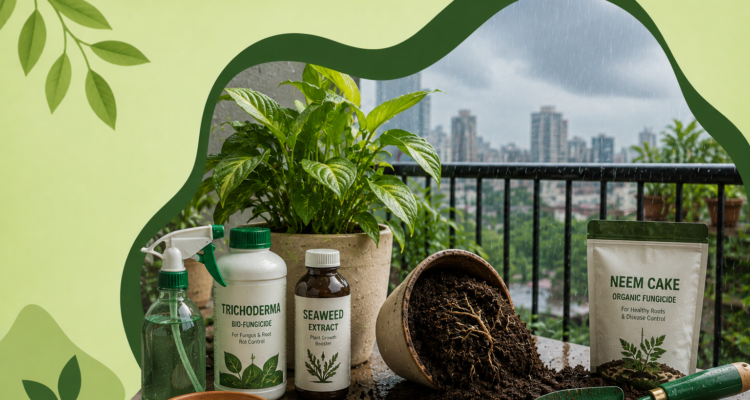
If you garden in Mumbai, you’ve probably lost a plant to root rot without fully understanding why. One week the leaves look fine; the next, they’re yellowing, wilting, and the stem feels soft at the base. Here are 10 fixes that actually work for root rot treatment for plants in a humid, high-rainfall city like Mumbai. By the time you notice, the roots underneath are usually already black, mushy, and beyond saving.
Mumbai’s combination of high humidity, monsoon downpours, and poor cross-ventilation on most balconies creates near-perfect conditions for root-rot fungi like Pythium, Fusarium, and Rhizoctonia. The good news: almost every case is preventable, and most early cases are treatable.
1. Fix Drainage Before You Treat Anything Else
No fungal root rot treatment works long-term if the pot is still sitting in standing water. Check that every drainage hole is actually clear — compacted soil silently blocks them over months. Elevate pots on feet or bricks so water isn’t trapped underneath, especially during monsoon when saucers fill faster than they evaporate.
2. Repot Into a Well-Draining Mix Immediately
Heavy, compacted garden soil holds water far longer than plants in Mumbai’s climate can tolerate. Switch to a mix with cocopeat, perlite, and coarse sand — this single change prevents more root rot cases than any fungicide.
3. Trim Away Infected Roots
For an early-stage case, gently remove the plant from its pot, rinse the roots, and cut away any that are brown, black, mushy, or foul-smelling with sterilized scissors. Healthy roots are firm and pale. This step is non-negotiable — no root rot fungus treatment works if diseased tissue is left in place to keep spreading.
4. Apply a Copper-Based or Systemic Fungicide
Once infected roots are trimmed, treat the remaining root ball and the new potting mix with a copper oxychloride solution or a systemic fungicide containing carbendazim, following label dosing. This is the core chemical step in most root rot treatment for plants, and it’s most effective immediately after trimming, while the wound sites are still exposed.
5. Use Trichoderma as a Preventive Biological Fungicide
Trichoderma-based biofungicides are a favorite among Mumbai gardeners because they work preventively, not just reactively. Mixed into the soil, Trichoderma colonizes the root zone and out-competes harmful fungi before they establish — making it one of the more sustainable long-term fungal root rot treatment options for a humid climate where reinfection risk stays high all year.
6. Let the Soil Surface Dry Between Waterings
Even in monsoon, the top inch of soil should dry out before you water again — this is true for nearly every potted plant except true bog or aquatic species. A simple finger test before watering prevents most of the overwatering-driven rot cases we see on Mumbai balconies.
7. Improve Airflow Around Your Pots
Fungal spores thrive in still, humid air. Space pots out rather than clustering them tightly along a railing, and where possible, use an oscillating fan on enclosed balconies during the wettest weeks. Better airflow also reduces powdery mildew and leaf-spot fungi, not just root-level infections.
8. Avoid Overwatering “Just to Be Safe”
It’s a common instinct to water more during hot spells between monsoon showers — this is usually the opposite of what the plant needs. Most root rot cases in Mumbai homes are caused by well-meaning overwatering layered on top of rain the plant already received. Check soil moisture before adding more.
9. Sterilize Pots and Tools Between Uses
Root-rot fungi survive in old soil residue and on unwashed tools. Before reusing a pot that previously held an infected plant, scrub it and rinse with a diluted bleach solution (1 part bleach to 9 parts water), then dry completely. Wipe pruning shears with alcohol between plants, especially if you’re trimming roots as part of treatment.
10. Quarantine and Monitor Recovering Plants
After treatment, keep the plant separate from the rest of your collection for 2–3 weeks. This limits spread if the fungal root rot treatment didn’t fully clear the infection, and makes it easier to track whether new growth is healthy or whether symptoms are returning.
Signs You’ve Caught It Early Enough to Save the Plant
- Yellowing that starts at the lower leaves, not the whole plant at once
- Slight softness at the soil line, but the stem above is still firm
- Roots that are mostly white or pale with only a few darker sections
If most of the root ball is already black and disintegrating, or the stem itself has gone soft and dark, the plant is usually too far gone to save — better to compost it and sterilize the pot for future use.
Building Root-Rot Resistance Into Your Routine
The single biggest shift for gardening successfully in Mumbai’s climate isn’t any one product — it’s building drainage checks and moisture monitoring into your regular routine rather than treating root rot as a one-time emergency fix. Once you’re doing that consistently, root rot becomes rare rather than routine.
Need supplies for treatment or prevention? Browse our Pest & Insect Control and Fertilizers & Soil categories for fungicides, biofungicides, and well-draining potting mixes suited to Mumbai’s humidity.

Akhilesh Maurya
Administrator at Farmer In Mumbai
- 15 Best Microgreens To Grow At Home In Your Balcony : A DIY guide
- How to Start an Areca Leaf Plate Making Business in India (2026 Guide)
- 12 Indoor Vastu Plants for Home in Mumbai With Direction And Pot Guide
- 10 Private Terrace Garden Ideas For Mumbai, Navi Mumbai And Thane Residents With Rules And Regulations
- How to Make Self Watering Pots at Home : 3 Easy DIY Methods
- How To Use Cocopeat For Plants : A Complete DIY Guide
- Balcony Garden Rules And Regulations In Mumbai Housing Societies
- Compost Bin For Kitchen Waste And Garden : A DIY Guide to Make, Buy and Use It
- Laid Off or Burned Out? 6 Small Garden Business Ideas You Can Start For Under ₹15,000
- Get Pesticide Free Vegetables Near Me in Mumbai: How to Verify Before You Buy
- 7 DIY Methods To Get Rid Of Mealybugs On Plants Naturally
- 10 Plants For North Facing Balcony In Mumbai, Thane And Navi Mumbai High Rise Buildings
[…] you already see white fuzzy spots or rot on your plants, read our guide on Fungus & Root Rot Treatment for Mumbai’s Humid Climate. It explains simple, safe […]
[…] risk for a microgreens business, especially in Mumbai’s humid weather. Read our guide on fungus and root rot treatment for Mumbai’s humid climate to protect your trays. If you are short on space, our Mumbai terrace garden ideas for small spaces […]
[…] Mumbai tip: Humidity is your biggest enemy. Too much water and no air cause mould. Keep a fan or an open window near your trays. If you see white fuzzy spots, read our guide on fungus and root rot in Mumbai’s humid climate. […]