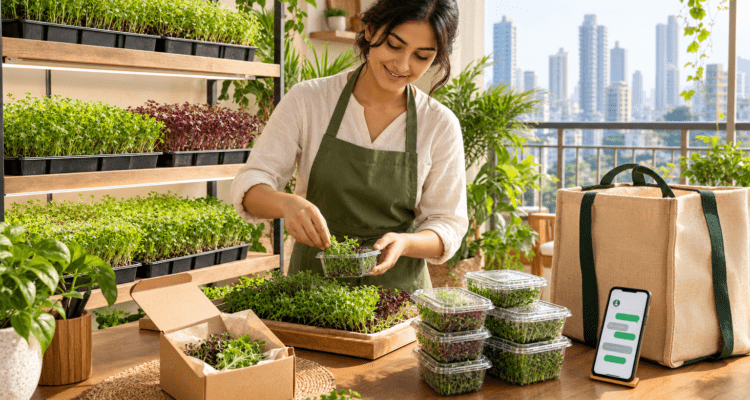
You have learned how to grow microgreens. Now where to sell microgreens near me ? Your trays look green and fresh. Now you ask a simple question: where to sell microgreens in India?
Good news. Many buyers need fresh microgreens every week. In this guide, we explain where to sell, how much buyers need, why they buy, how to contact them, and how to become a long-term supplier.
If you have not started growing yet, first read our guide on the 15 best microgreens to grow at home in your balcony.
1. Places Where You Can Sell Microgreens
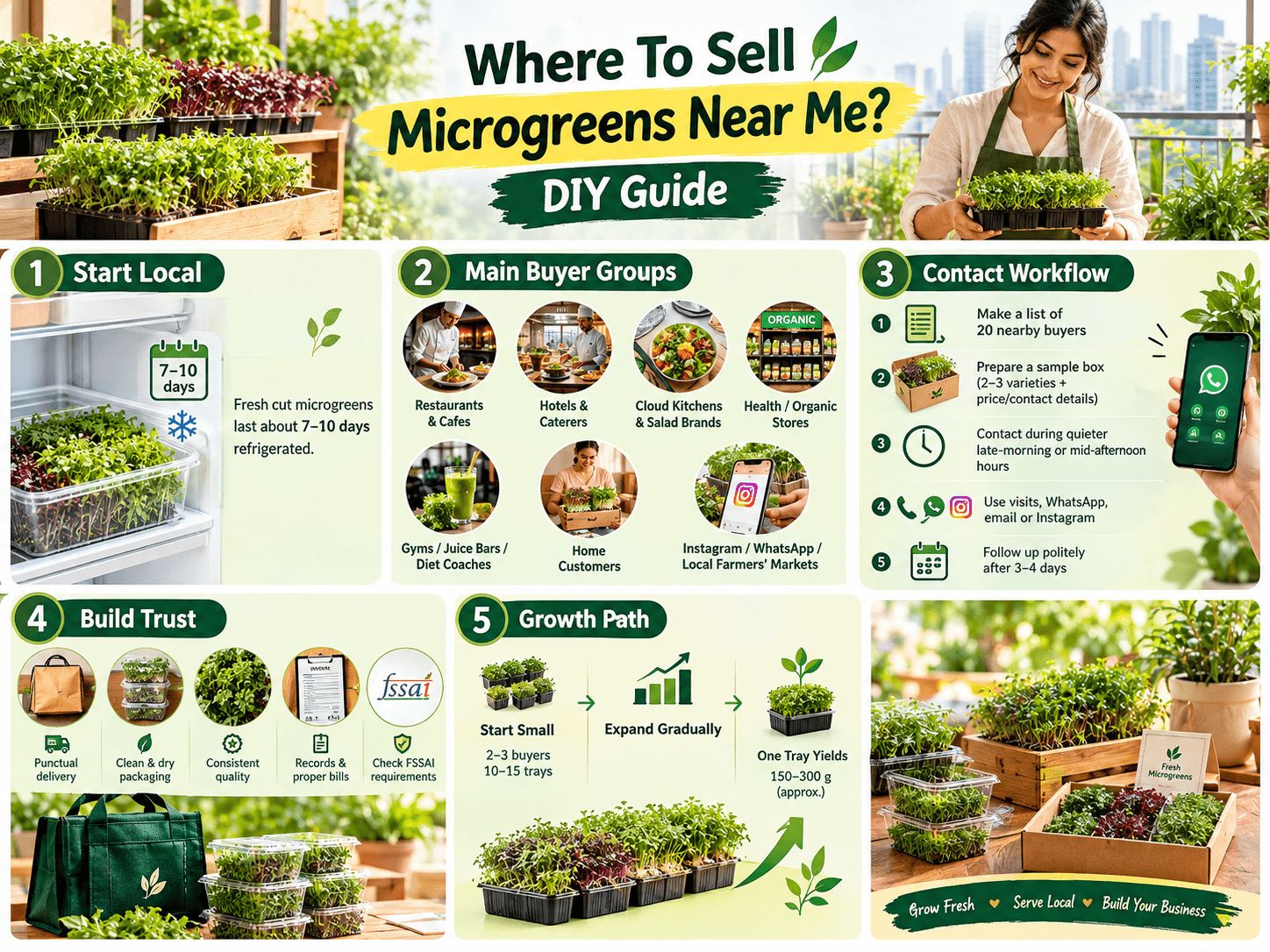
Start with buyers who are close to you. Fresh microgreens last only 7 to 10 days in the fridge. So local selling works best.
Restaurants and cafes
Chefs use microgreens on salads, sandwiches, pizzas, and desserts. They make food look good and add fresh taste. This is the easiest place to start.
Hotels and catering companies
Hotels buy in bigger amounts. They also pay on a regular schedule. It takes time to get in, but the orders are steady.
Cloud kitchens and salad or bowl brands
Many small food brands sell healthy bowls. They need fresh greens every week.
Health food and organic stores
These shops sell to people who care about health. You can supply small 50 g or 100 g packs.
Gyms, juice bars, and diet coaches
Their customers want protein and nutrition. Sunflower and pea shoots are popular here.
Home customers
Sell to your housing society, WhatsApp groups, and friends. Weekly subscriptions work well. Home customers also give you honest feedback.
Online and local markets
You can sell on Instagram, WhatsApp Business, and local farmers’ markets. Start with a small group of buyers and grow slowly.
2. Estimated Monthly Quantity Needed
The numbers below are rough estimates. Every business is different. Ask each buyer how much they really need before you promise anything.
| Buyer | Estimated monthly need |
| Small cafe | 1 to 3 kg |
| Fine dining restaurant or bar | 3 to 8 kg |
| Cloud kitchen or salad brand | 5 to 15 kg |
| Health food or organic store | 2 to 5 kg (40 to 100 small packs) |
| Gym cafe or juice bar | 2 to 5 kg |
| Hotel (all kitchens together) | 15 to 40 kg |
| Home customers (10 to 30 packs of 100 g) | 1 to 3 kg |
How many trays do you need?
One tray gives roughly 150 to 300 grams, depending on the crop. If you want to sell 10 kg a month, you need about 40 trays a month. Do not start with this much. Start with 2 or 3 buyers and 10 to 15 trays. Then grow step by step.
Things you need for growing:
- Clean trays and a simple shelf rack
- A cocopeat block as the growing base
- Good seeds
- A water spray bottle for gentle watering
- Some soil and fertilizer products if you also grow other plants
3. Why Do Buyers Need Microgreens?
Buyers have clear reasons. When you know them, you can sell better.
- Looks: A small green topping makes a plate look rich. Chefs want this.
- Taste: Microgreens add a fresh, peppery, sweet, or nutty taste.
- Health: Many people see microgreens as a healthy food. Gyms and diet brands use this in their marketing.
- Freshness: Microgreens do not stay fresh for long. Buyers want a local grower who can deliver every week.
- Steady supply: Restaurants cannot run out of a garnish in the middle of a busy week. They need someone they can trust.
Tell your buyers this. Say, “I cut the microgreens on the same day and deliver them fresh.” That is your biggest strength.
4. How To Contact Buyers
Many new growers feel shy at this step. Keep it simple.
Step 1: Make a list.
Write down 20 restaurants, cafes, and stores near you. Add their phone number, email, and Instagram page.
Step 2: Prepare a small sample.
Take a small box of 2 or 3 varieties. Add a price list and your phone number.
Step 3: Choose the right time.
Chefs are very busy during lunch and dinner. Visit or call in the quiet hours, usually late morning or mid-afternoon.
Step 4: Reach out in different ways.
- Visit the kitchen door with a sample box
- Send a WhatsApp message
- Send a short email
- Send an Instagram message to the cafe page
Sample WhatsApp message:
Hello Chef, my name is [Your Name]. I grow fresh microgreens in [Your Area] and deliver on the same day. I would love to send you a free sample of sunflower, radish, and pea shoots. May I drop it this week?
Step 5: Follow up.
If they do not reply, wait 3 or 4 days. Then send one polite message. Ask what they liked and what they did not like.
Tips to win trust:
- Always be on time
- Pack clean and dry
- Keep the same quality every time
- Keep records and give proper bills
- Check FSSAI rules for selling food products. Small sellers usually need at least a basic registration.
5. Long Term Supplier Potential
One good buyer can become a long-term customer. Here is how it grows.
Start: One cafe orders 1 kg a month.
Month 3: Chef is happy. They order every week and tell other chefs.
Month 6: The owner has more than one outlet. Now you supply all outlets.
Year 1: You have 5 to 10 regular buyers. Your monthly sale is steady.
How to become a long-term supplier:
- Deliver on the same day every week
- Never miss an order, even if it is small
- Offer a fixed weekly order with a fixed price
- Keep a small extra stock for sudden orders
- Grow 3 to 5 popular varieties very well before adding more
- Ask for feedback every month
Ways to grow later:
- Supply to hotel chains and catering companies
- Add wheatgrass, baby spinach, or edible flowers
- Sell live trays to home customers
- Rent a small space and add more racks
- Train other people and start a small team
Mould is the biggest risk for a microgreens business, especially in Mumbai’s humid weather. Read our guide on fungus and root rot treatment for Mumbai’s humid climate to protect your trays. If you are short on space, our Mumbai terrace garden ideas for small spaces will help. You can also find trays, pots, and seeds at the best plant markets and nurseries in Mumbai.
Frequently Asked Questions
Can I sell microgreens from home in India?
Yes. Many people start from a balcony or a spare room. Keep the space clean. Check FSSAI rules for your area.
Which microgreens sell the most?
Sunflower, radish, pea shoots, mustard, and broccoli sell well. Chefs like colour and taste. Home buyers like sunflower and pea shoots.
How much money do I need to start?
You can start small with a few trays, seeds, cocopeat, and a shelf. Start with a small number of trays and grow as orders come.
How long do microgreens stay fresh?
Cut microgreens stay fresh for about 7 to 10 days in the fridge. Live trays last a little longer if you water them well.
Should I sell cut microgreens or live trays?
Restaurants prefer cut, packed microgreens. Home buyers often like live trays because they can cut them fresh at home.
Final Words
Selling microgreens is not hard. Start with a few local buyers, give good samples, and deliver on time. Trust is what turns one small order into a long-term business.
Want to grow your own garden or get help with your terrace or balcony? Visit our services page or contact us. Keep reading more on our blog and DIY guides.

Akhilesh Maurya
Administrator at Farmer In Mumbai
- 15 Best Microgreens To Grow At Home In Your Balcony : A DIY guide
- How to Start an Areca Leaf Plate Making Business in India (2026 Guide)
- 12 Indoor Vastu Plants for Home in Mumbai With Direction And Pot Guide
- 10 Private Terrace Garden Ideas For Mumbai, Navi Mumbai And Thane Residents With Rules And Regulations
- How to Make Self Watering Pots at Home : 3 Easy DIY Methods
- How To Use Cocopeat For Plants : A Complete DIY Guide
- Balcony Garden Rules And Regulations In Mumbai Housing Societies
- Compost Bin For Kitchen Waste And Garden : A DIY Guide to Make, Buy and Use It
- Laid Off or Burned Out? 6 Small Garden Business Ideas You Can Start For Under ₹15,000
- Get Pesticide Free Vegetables Near Me in Mumbai: How to Verify Before You Buy
- 7 DIY Methods To Get Rid Of Mealybugs On Plants Naturally
- 10 Plants For North Facing Balcony In Mumbai, Thane And Navi Mumbai High Rise Buildings
[…] read where to sell microgreens near me. It shows more selling […]