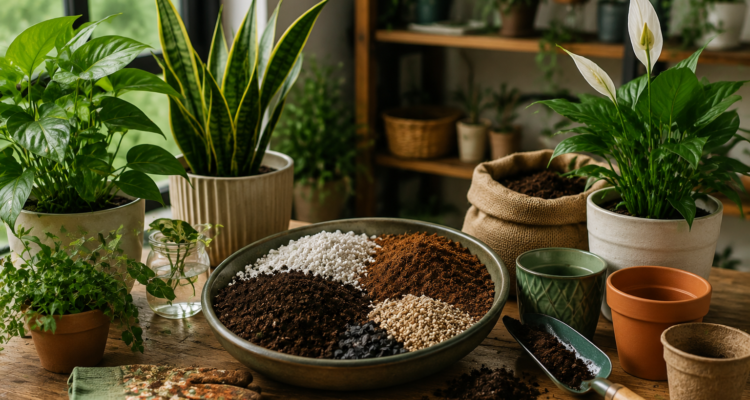
If your indoor plants look tired, yellow, or simply refuse to grow, the problem is rarely the plant itself. You need best soil mix for indoor plants. In nine out of ten cases in Mumbai homes, it is the soil mix. Mumbai’s humid air, hard tap water, small balconies, and closed apartments make ordinary “mitti” from outside unfit for pots. Plants need a mix that drains fast, holds just enough moisture, and lets roots breathe.
In our 12 Indoor Vastu Plants for Home in Mumbai guide, we covered directions and pot choices. This post goes one step further and gives you the best soil mix for indoor plants, made from ingredients you can easily buy from a local nursery or order online — with the exact ratio, the reason it works, and how to apply it for each of the 12 plants.
Why the Right Soil Mix Matters in Mumbai Homes
Mumbai’s climate swings between heavy monsoon humidity and dry summer heat. Ordinary garden soil turns hard and compact in pots, chokes the roots, and holds water too long, causing root rot — the single biggest killer of indoor plants in coastal cities. A good potting mix fixes three things at once:
- Drainage – excess water escapes quickly instead of sitting at the roots
- Aeration – roots get oxygen, which is what most indoor plant deaths are actually about
- Nutrition – a steady, mild supply of nutrients instead of one heavy dose
The Base Formula You Can Reuse for Almost Any Indoor Plant
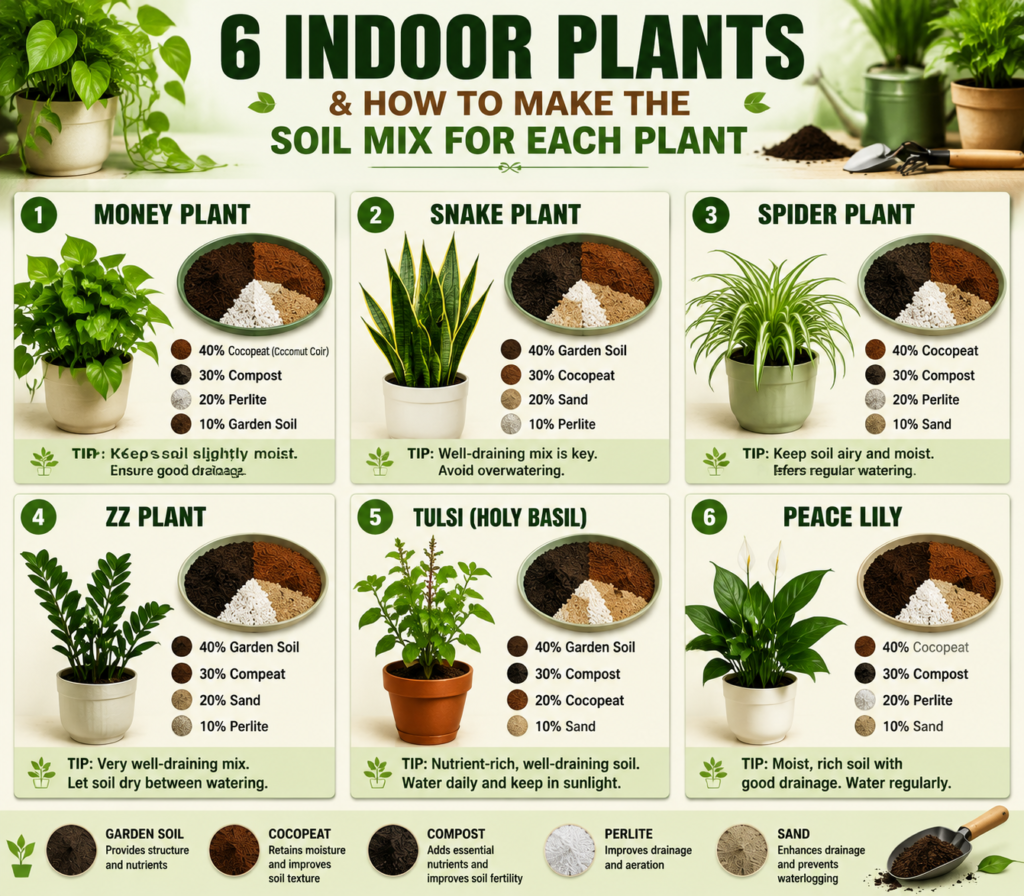
Before the plant-specific recipes, here is the base mix most indoor plants in Mumbai are happy with. Every packaged ingredient below can be ordered from our Fertilizers & Soil shop — only the garden soil needs to be sourced locally from a nursery:
- 40% Cocopeat (soaked and fluffed) – holds moisture without turning soggy — Ugaoo Cocopeat Block
- 30% Garden soil or red soil – gives the mix body and minerals (source locally from a nursery)
- 20% Compost or vermicompost – slow-release nutrition — Ugaoo Organic Vermicompost (Value Pack)
- 10% Perlite or sand – keeps the mix airy and improves drainage — Perlite Growing Medium
From this base, each plant below needs small adjustments — some want more drainage (succulents), some want more moisture retention (Peace Lily), and some want extra nutrition (flowering plants like Marigold and Jasmine).
1. Money Plant (Pothos) — Soil Mix
How to make it: Mix 40% cocopeat, 30% garden soil, 20% Ugaoo Organic Vermicompost (Compact Pack), and 10% Perlite Growing Medium. Money Plant also grows well in plain water, but for pot culture this mix works best.
Why it matters: Money Plant roots are thin and spread quickly; they rot if the mix stays wet for long, so light, well-draining soil is essential.
How to apply: Water when the top inch of soil feels dry — usually every 3-4 days in summer, once a week in monsoon. Add a diluted Quick Med Organic Liquid Biofertilizer once a month. Best watered in the early morning.
2. Snake Plant — Soil Mix
How to make it: Use a fast-draining mix: 50% Perlite Growing Medium or coarse sand, 30% garden soil, 20% compost. Avoid cocopeat-heavy mixes since Snake Plant hates staying wet.
Why it matters: Snake Plant is prone to root rot more than almost any other indoor plant. A gritty, sandy mix mimics its natural desert-like habitat.
How to apply: Water only once every 10-14 days, and only when soil is bone dry. Reduce to once a month in the monsoon. Feed with a mild NPK All Purpose Water Soluble Plant Food solution once every two months. Morning watering is ideal.
3. Areca Palm — Soil Mix
How to make it: 35% cocopeat, 35% garden soil, 20% Ugaoo Organic Vermicompost (Value Pack), 10% Perlite Growing Medium. Areca Palm likes a slightly rich, moisture-retentive mix.
Why it matters: Areca Palm has dense roots that need consistent moisture and steady feeding to keep fronds green and prevent brown tips.
How to apply: Water 2-3 times a week, keeping soil evenly moist but never waterlogged. Mist leaves in Mumbai’s dry season. Feed with Quick Med Organic Liquid Biofertilizer every 45 days. Water in the morning, mist in the evening.
4. Tulsi (Holy Basil) — Soil Mix
How to make it: 40% garden soil, 30% cocopeat, 20% compost, 10% Perlite Growing Medium. Tulsi prefers a mix that drains fast but still holds some nutrition.
Why it matters: Tulsi is sensitive to waterlogging and needs full sun exposure with a mix that dries out between waterings, or the stem rots.
How to apply: Water daily in summer (early morning, before sunrise as per tradition), every alternate day in monsoon. Add TrustBasket Neem Cake Powder once a month to keep pests away and boost growth.
5. Jade Plant — Soil Mix
How to make it: A succulent mix: 50% Perlite Growing Medium or coarse sand, 30% garden soil, 20% compost. Jade Plant is a succulent and needs excellent drainage above all else.
Why it matters: Jade Plant stores water in its leaves; a heavy or moisture-retentive mix leads to mushy, rotting stems very quickly.
How to apply: Water once every 10-12 days, only when the soil is fully dry. Cut back to once a month in monsoon. Feed a diluted GREENFINITY Seaweed Liquid Fertilizer every two months. Water in the morning.
6. Peace Lily — Soil Mix
How to make it: 45% cocopeat, 25% garden soil, 20% compost, 10% Perlite Growing Medium. Or simply use TrustBasket Organic Potting Soil Fertilizer Mix, which is already blended for moisture retention. Peace Lily is one of the few indoor plants that prefers a moisture-rich mix.
Why it matters: Peace Lily droops visibly when thirsty, so the mix needs to hold moisture longer while still draining excess water at the base.
How to apply: Water 2-3 times a week, keeping soil consistently moist. Reduce slightly in monsoon. Feed with Quick Med Organic Liquid Biofertilizer once a month. Best watered in the evening.
7. Lucky Bamboo — Soil Mix
How to make it: Lucky Bamboo usually grows in water with pebbles, but for soil culture use 40% cocopeat, 40% garden soil, 20% compost, kept consistently moist.
Why it matters: Its roots need constant hydration; too dry a mix causes yellowing stalks and stunted growth.
How to apply: If in water, change water every 7-10 days using clean, room-temperature (non-chlorinated) water. If in soil, water every 2-3 days. Keep away from direct afternoon sun.
8. Rubber Plant — Soil Mix
How to make it: 35% garden soil, 30% cocopeat, 25% compost, 10% Perlite Growing Medium. Or use TrustBasket Organic Potting Soil Fertilizer Mix topped up with cocopeat. Rubber Plant likes a rich but well-draining mix to support its large leaves.
Why it matters: A nutrient-dense mix keeps the broad, glossy leaves healthy; poor soil leads to leaf drop and dull colour.
How to apply: Water once the top 2 inches of soil are dry — roughly twice a week in summer, once a week in monsoon. Wipe leaves monthly and feed with Bone Meal Fertilizer (Root & Flower Booster) every 6-8 weeks. Morning watering preferred.
9. Aloe Vera — Soil Mix
How to make it: A cactus-style mix: 50% Perlite Growing Medium or coarse sand, 30% garden soil, 20% compost. Like Jade, Aloe Vera is a succulent and needs sharp drainage.
Why it matters: Aloe Vera’s fleshy leaves rot quickly in dense, wet soil; a gritty mix replicates its natural arid growing conditions.
How to apply: Water once every 12-15 days, only when soil is completely dry. Almost stop watering in peak monsoon. Feed lightly with Ugaoo Epsom Salt once every two months for healthier gel content.
10. Marigold — Soil Mix
How to make it: 35% garden soil, 25% cocopeat, 30% Ugaoo Organic Vermicompost (Value Pack), 10% Perlite Growing Medium. Marigold is a heavy feeder and flowers best in nutrient-rich soil.
Why it matters: As a flowering plant, Marigold needs more compost than foliage plants to keep producing blooms continuously.
How to apply: Water daily in summer, alternate days in monsoon, always in the morning. Feed with Bone Meal Fertilizer (Root & Flower Booster) every 3 weeks during the flowering season to encourage more buds.
11. Jasmine (Mogra) — Soil Mix
How to make it: 40% garden soil, 25% cocopeat, 25% compost, 10% Perlite Growing Medium. Jasmine prefers a slightly rich, well-draining mix, refreshed with organic matter often.
Why it matters: Jasmine is a heavy bloomer, and tired soil is the most common reason plants stop flowering after the first season.
How to apply: Water every 2 days in summer, once every 3-4 days in monsoon. Feed with TrustBasket Neem Cake Powder once a month, and top-dress with Bone Meal Fertilizer (Root & Flower Booster) every 2 months. Water and prune in the early morning for best flowering.
12. Spider Plant — Soil Mix
How to make it: 40% cocopeat, 30% garden soil, 20% compost, 10% Perlite Growing Medium. Spider Plant is forgiving but grows fuller in a light, well-aerated mix.
Why it matters: Its shallow, fast-spreading roots need loose soil to multiply and send out the baby “spiderettes” it’s known for.
How to apply: Water twice a week, letting the topsoil dry slightly between waterings. Reduce in monsoon. Feed with NPK All Purpose Water Soluble Plant Food once every 6 weeks. Keep in bright, indirect light with regular morning watering.
Quick Reference Table
| Plant | Drainage Need | Watering (Summer) | Key Ingredient |
| Money Plant | Medium | Every 3-4 days | Vermicompost |
| Snake Plant | High | Every 10-14 days | Perlite / Sand |
| Areca Palm | Medium | 2-3 times a week | Vermicompost |
| Tulsi | Medium-High | Daily | Neem Cake |
| Jade Plant | High | Every 10-12 days | Perlite |
| Peace Lily | Low | 2-3 times a week | Potting Mix |
| Lucky Bamboo | Low (water-based) | Change water weekly | — |
| Rubber Plant | Medium | Twice a week | Potting Mix |
| Aloe Vera | High | Every 12-15 days | Perlite |
| Marigold | Medium | Daily | Vermicompost + Bone Meal |
| Jasmine | Medium | Every 2 days | Neem Cake |
| Spider Plant | Medium | Twice a week | Cocopeat |
Common Mistakes to Avoid
- Using only garden soil — it compacts inside pots and suffocates roots
- Skipping drainage material — always add sand, perlite, or brick jelly at the pot base
- Overwatering succulents like Jade and Aloe Vera during Mumbai’s monsoon
- Not refreshing soil — top-dress with fresh compost every 2-3 months, and repot with new mix once a year
Where to Buy Soil Mix Ingredients in Mumbai
You don’t need to visit multiple stores. Cocopeat blocks, organic vermicompost, neem cake powder, NPK, potting soil mix, bone meal, Epsom salt, and seaweed concentrate are all available in our Fertilizers & Soil collection on the Farmer In Mumbai shop, delivered to your door — ideal for apartment gardeners who don’t have time to source from nurseries across the city.
Frequently Asked Questions
Can I use only cocopeat for indoor plants? No. Cocopeat alone has almost no nutrients. Always mix it with compost and garden soil for a balanced feed.
How often should I change the soil mix? Top-dress every 2-3 months and fully repot with fresh mix once a year, ideally just before or after monsoon.
Is normal garden mitti safe for indoor pots? Not on its own. It compacts easily in containers. Mix it with cocopeat, compost, and perlite or sand for pot use.
Do all 12 plants need the same soil mix? No — succulents like Snake Plant, Jade, and Aloe Vera need sandy, fast-draining mixes, while Peace Lily and Areca Palm need more moisture-retentive mixes.
Written by Farmer In Mumbai — helping Mumbai homes grow greener, one balcony at a time.

Akhilesh Maurya
Administrator at Farmer In Mumbai
- 15 Best Microgreens To Grow At Home In Your Balcony : A DIY guide
- How to Start an Areca Leaf Plate Making Business in India (2026 Guide)
- 12 Indoor Vastu Plants for Home in Mumbai With Direction And Pot Guide
- 10 Private Terrace Garden Ideas For Mumbai, Navi Mumbai And Thane Residents With Rules And Regulations
- How to Make Self Watering Pots at Home : 3 Easy DIY Methods
- How To Use Cocopeat For Plants : A Complete DIY Guide
- Balcony Garden Rules And Regulations In Mumbai Housing Societies
- Compost Bin For Kitchen Waste And Garden : A DIY Guide to Make, Buy and Use It
- Laid Off or Burned Out? 6 Small Garden Business Ideas You Can Start For Under ₹15,000
- Get Pesticide Free Vegetables Near Me in Mumbai: How to Verify Before You Buy
- 7 DIY Methods To Get Rid Of Mealybugs On Plants Naturally
- 10 Plants For North Facing Balcony In Mumbai, Thane And Navi Mumbai High Rise Buildings