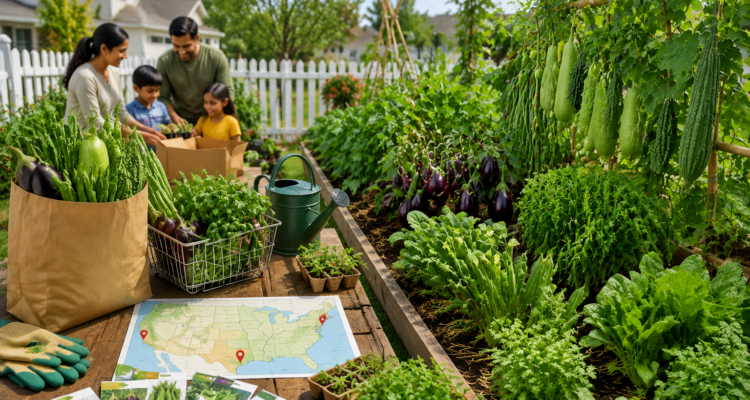
Missing the taste of home-grown lauki, bhindi, or methi? Growing Indian vegetables in USA gardens has become a popular hobby among Indian families, especially after the pandemic when many of us discovered how relaxing (and rewarding) it is to grow your own sabzi. The good news is that most vegetables used in a typical Indian kitchen grow very well in American backyards, raised beds, and even containers, as long as you understand your local climate.
In this guide, we will cover the most commonly used Indian vegetables and give you practical, season-wise tips for three very different climates: California, Texas, and New Jersey. Whether you are in a warm coastal California town, a hot Texas summer, or a cold New Jersey winter, this guide will help you plan your garden correctly.
Understanding Your Climate Before Growing Indian Vegetables In USA
Before we get to the vegetables, it helps to understand how these three states differ. Most Indian vegetables originally grow in tropical and subtropical conditions, so they love heat, humidity, and long sunny days. This means your growing strategy will change a lot depending on where you live.
California has a mild, dry climate. Coastal areas like the Bay Area stay cool most of the year, while inland regions like Sacramento and the Central Valley get hot, dry summers. California rarely gets hard frost in most growing areas, so the growing season is long, but water management is important since rainfall is low.
Texas has hot, humid summers and short, mild winters. Most of Texas (especially Central and South Texas) barely gets frost, so you can grow almost year-round. The challenge here is extreme summer heat, which can stress plants like tomatoes and chillies if not managed well.
New Jersey has a proper four-season climate with cold winters and warm, humid summers. This means your growing window is much shorter, and you will need to start seeds indoors early and protect plants from frost in spring and fall.
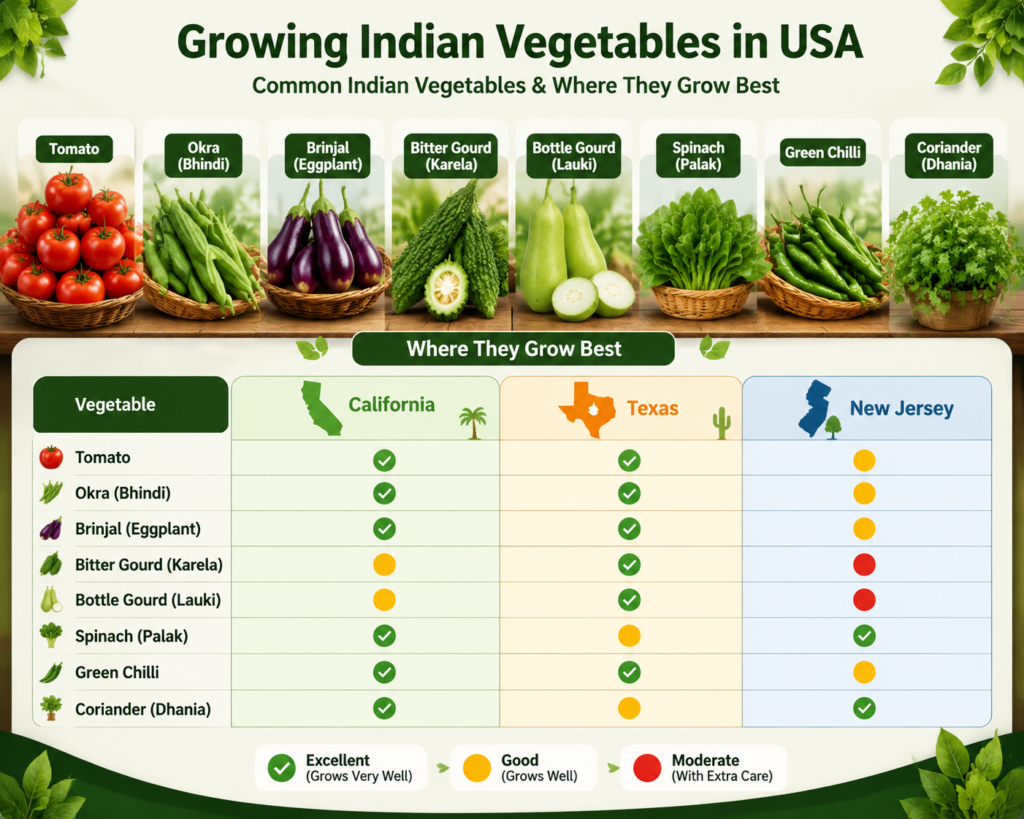
Keep these differences in mind as we go through each vegetable below.
Bhindi (Okra) — A Summer Favourite Everywhere
Okra loves heat and is one of the easiest Indian vegetables to grow in the USA.
California: Plant after the last frost, ideally in inland or Central Valley areas where summer heat is strong. Coastal growers may get smaller yields due to cooler air.
Texas: Okra thrives here. Plant in late spring and it will keep producing right through peak summer heat, when many other vegetables struggle.
New Jersey: Wait until late May or early June when soil is warm. Choose a fast-maturing variety, as your window is shorter than California or Texas.
Tip: Pick pods when they are 2-3 inches long. Overgrown okra turns fibrous and hard.
Karela (Bitter Gourd) — Needs Long, Warm Days
Bitter gourd is a vine crop that needs a trellis and plenty of warmth.
California: Grows best in the warmer inland valleys. Coastal gardeners may need a greenhouse or a sunny, sheltered wall to get enough heat.
Texas: One of the best states for karela. The long, hot, humid summer matches its native growing conditions closely.
New Jersey: Start seeds indoors 3-4 weeks before the last frost and transplant once nights stay above 60°F. A short Jersey summer means fewer but still worthwhile harvests.
Tip: Soak seeds overnight before sowing to improve germination.
Lauki (Bottle Gourd) and Turai (Ridge Gourd) — Vigorous Summer Vines
Both need strong support and a lot of space, so a fence or trellis works well.
California: Excellent in inland regions with hot, dry summers. Regular deep watering is important since California’s dry air increases water needs.
Texas: Grows fast and vigorously in summer heat. Watch for squash vine borers, which are common in Texas gardens.
New Jersey: Choose compact or early varieties. Start indoors and transplant after frost risk is fully gone, usually mid-May.
Tip: Both vines benefit from morning sun and afternoon partial shade in very hot Texas summers to prevent leaf scorch.
Baingan (Eggplant) — Reliable in All Three States
Eggplant is one of the more forgiving Indian vegetables for American climates.
California: Grows well almost everywhere in the state; coastal areas may need dark mulch to warm the soil.
Texas: Plant in early spring for a summer harvest, then again in late summer for a fall crop, since Texas often allows two growing cycles.
New Jersey: Start seeds indoors 8 weeks before the last frost. Choose smaller Indian varieties like the round purple brinjal, which mature faster than large American types.
Tip: Consistent watering prevents bitterness in the fruit.
Mirchi (Chilli Peppers) — Sun-Loving and Easy in Containers
Chillies are compact enough to grow in pots, making them ideal even for small balconies.
California: Long, warm growing season suits chillies very well, especially in Southern California and the Central Valley.
Texas: Chillies handle Texas heat better than most vegetables, though extreme summer highs above 95°F can cause flowers to drop temporarily.
New Jersey: Start indoors early, as chillies are slow to mature. Move pots outdoors only after nights are reliably warm.
Tip: In peak Texas or inland California summer, afternoon shade helps prevent flower drop.
Methi (Fenugreek) and Palak (Spinach) — Cool Season Greens
Unlike the vegetables above, these leafy greens prefer cooler weather and can even handle light frost.
California: Grow through most of winter in mild coastal and Southern California zones.
Texas: Best grown from October to February, avoiding the hot summer months when they bolt quickly.
New Jersey: Perfect for early spring (March-April) and again in fall (September-October), before and after the hard freeze.
Tip: Harvest methi leaves by cutting rather than pulling, so the plant regrows for a second cutting.
Tamatar (Tomatoes) — The Universal Favourite
Tomatoes are the most widely grown vegetable across Indian-American gardens.
California: Long season allows multiple tomato varieties; inland heat may need afternoon shade for delicate types.
Texas: Plant early (Feb-March) to harvest before peak summer heat, which can stop fruit set above 95°F. A second fall planting works well too.
New Jersey: Start indoors in March, transplant after frost passes in May. One solid summer harvest is typical.
Tip: Desi tomato varieties with smaller fruit often handle American summer heat better than large slicing types.
Guar (Cluster Beans) and Chawli (Cowpea/Lobia) — Heat-Tolerant Vines
These are lesser-known outside Indian kitchens but grow easily where summers are strong.
California: Best in inland valleys with consistent summer heat.
Texas: Extremely well suited, as these crops originate from hot, semi-arid regions similar to Texas summers.
New Jersey: Possible in a short summer window, but yields will be lower compared to Texas or inland California.
Tip: These are drought-tolerant once established, useful for Texas and California’s dry spells.
Dhania (Coriander) — Grow in Small, Frequent Batches
Coriander bolts (flowers early) quickly in heat, so timing matters a lot.
California: Grow through winter and early spring in most regions; avoid peak summer.
Texas: Best from October through March, since Texas summer heat causes almost instant bolting.
New Jersey: Grow in spring and fall; summer heat combined with humidity will bolt it fast.
Tip: Sow a small batch every 2-3 weeks for a continuous supply instead of one large planting.
Quick Season Planner by State
| Vegetable | California | Texas | New Jersey |
| Bhindi, Karela, Lauki, Turai, Guar | Summer (inland best) | Late spring to summer | Late May to August |
| Baingan, Mirchi, Tamatar | Spring to fall | Spring and fall (two cycles) | Late spring to summer |
| Methi, Palak, Dhania | Fall to winter | Oct to Feb | Spring and fall |
Final Tips for Growing Indian Vegetables In USA
- Start with containers if you are new to gardening; most Indian vegetables adapt well to pots, especially mirchi, methi, and baingan.
- Use raised beds in New Jersey to warm the soil faster in spring and extend your short growing season.
- Mulch heavily in Texas and inland California to retain soil moisture during intense summer heat.
- Buy seeds from Indian grocery stores or specialty seed sellers online, since desi varieties perform better in taste and heat tolerance than regular American hybrids.
- Watch your local frost dates closely in New Jersey, and your peak heat window in Texas, as these two factors decide your entire planting calendar.
Growing Indian vegetables in USA gardens is a satisfying way to enjoy fresh, chemical-free sabzi while staying connected to home. With the right timing for your state’s climate, even a small balcony or backyard can give you a steady supply of bhindi, karela, lauki, and more through the growing season.
Have questions about growing a specific Indian vegetable in your city? Drop a comment below and we will help you plan your garden

Akhilesh Maurya
Administrator at Farmer In Mumbai
- 15 Best Microgreens To Grow At Home In Your Balcony : A DIY guide
- How to Start an Areca Leaf Plate Making Business in India (2026 Guide)
- 12 Indoor Vastu Plants for Home in Mumbai With Direction And Pot Guide
- 10 Private Terrace Garden Ideas For Mumbai, Navi Mumbai And Thane Residents With Rules And Regulations
- How to Make Self Watering Pots at Home : 3 Easy DIY Methods
- How To Use Cocopeat For Plants : A Complete DIY Guide
- Balcony Garden Rules And Regulations In Mumbai Housing Societies
- Compost Bin For Kitchen Waste And Garden : A DIY Guide to Make, Buy and Use It
- Laid Off or Burned Out? 6 Small Garden Business Ideas You Can Start For Under ₹15,000
- Get Pesticide Free Vegetables Near Me in Mumbai: How to Verify Before You Buy
- 7 DIY Methods To Get Rid Of Mealybugs On Plants Naturally
- 10 Plants For North Facing Balcony In Mumbai, Thane And Navi Mumbai High Rise Buildings