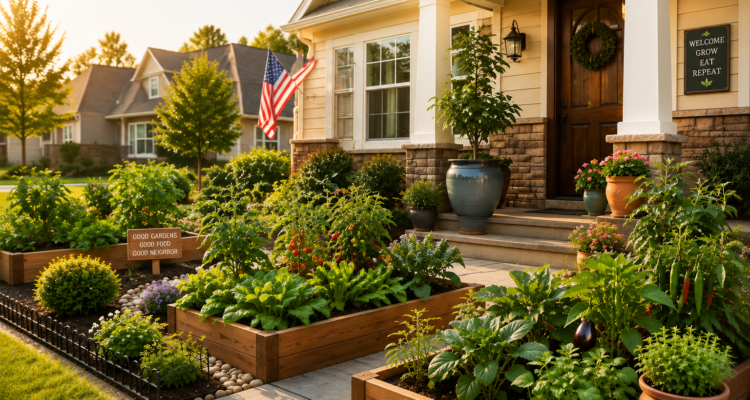
If you are an Indian living in the USA, you know the feeling. You miss the taste of home-grown methi, fresh curry leaves, and tinda straight from the garden. Question is how to create HOA approved vegetable garden ? But your HOA (Homeowners Association) has strict rules about how your front yard and backyard should look. One unapproved tomato plant near your porch, and you may get a warning letter.
The good news? You do not have to give up on desi vegetable gardening. With a little planning, you can grow a beautiful, productive garden that follows HOA guidelines and still gives you fresh sabzi all season.
This guide is written for Indian families in the US who want a garden that is both HOA-friendly and full of home flavours.
Why HOAs Restrict Vegetable Gardens
Most HOAs are not against gardening itself. They are against gardens that look messy, unmanaged, or different from the rest of the neighbourhood. Common HOA concerns include:
- Visible vegetable beds in the front yard
- Tall or sprawling plants blocking views
- Irrigation lines, stakes, or trellises that look untidy
- Compost bins or manure smell
- Non-native or “foreign looking” plants that stand out
Once you understand what HOAs actually object to, it becomes much easier to design around their rules instead of fighting them.
Step 1: Read Your HOA’s CC&Rs Carefully
Before planting anything, get a copy of your community’s CC&Rs (Covenants, Conditions, and Restrictions). Look specifically for sections on:
- Landscaping and “approved plant lists”
- Front yard versus backyard rules (backyards usually have more freedom)
- Container gardening and raised beds
- Fencing and screening requirements
- Architectural Review Committee (ARC) approval process
Many HOAs allow vegetable gardening in the backyard with no restrictions at all, and only regulate what is visible from the street. Knowing this one detail can save you months of back-and-forth.
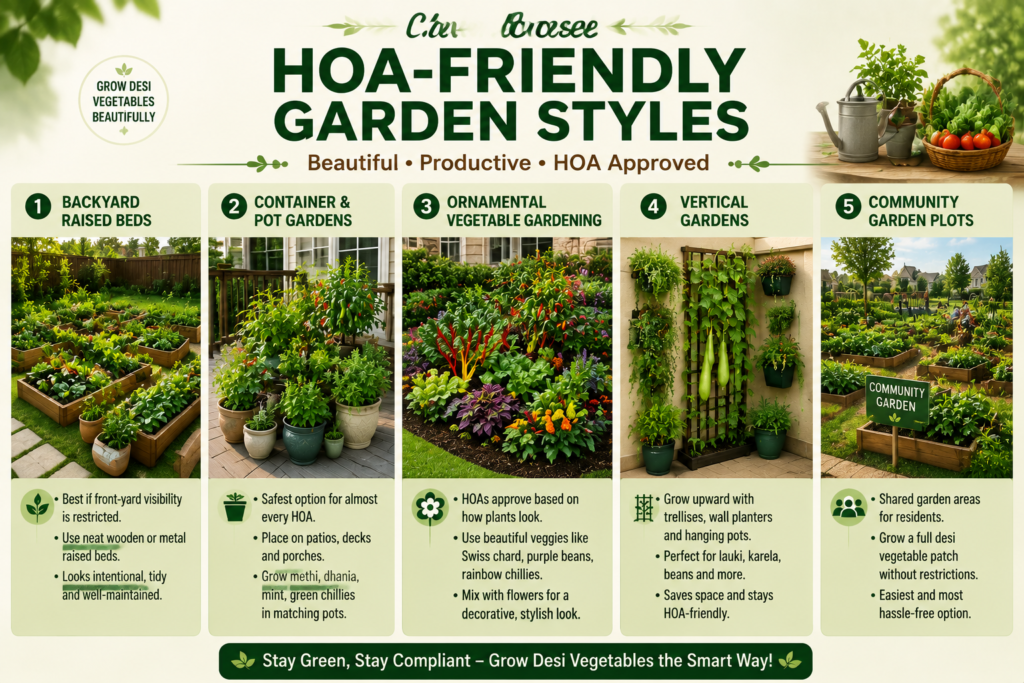
Step 2: Choose HOA-Friendly Garden Styles
1. Backyard Raised Beds
If your HOA only restricts front-yard visibility, raised beds in the backyard are the easiest route. Use neat wooden or metal raised beds instead of loose soil patches, since these look intentional and well-maintained.
2. Container and Pot Gardens
Containers are the safest option across almost every HOA, since they can be placed on patios, decks, and porches without changing the landscape. Grow Indian favourites like methi, dhania, mint, and green chillies in matching pots for a clean, uniform look.
3. Ornamental Vegetable Gardening
Many HOAs approve plants based on how they look, not what they are. Vegetables like Swiss chard, purple beans, and rainbow chillies can double as ornamental plants. Mix them with flowers so the bed looks decorative rather than “farm-like.”
4. Vertical Gardens
Trellises, wall planters, and hanging pots let you grow lauki, karela, and beans upward instead of outward. Vertical gardens use less visible ground space, which HOAs generally prefer.
5. Community Garden Plots
Some HOA communities have a shared garden area specifically for residents. If yours does, this is the most hassle-free way to grow a full desi vegetable patch without any front-yard restrictions at all.
Step 3: Best Indian Vegetables for HOA-Friendly Gardens
Here are vegetables that are compact, attractive, and suited to containers or small beds:
- Methi (Fenugreek) – Grows quickly in shallow containers
- Dhania (Coriander) – Small footprint, looks like an herb, rarely questioned
- Green Chillies – Compact bush, ornamental appearance
- Tomatoes (Cherry or Patio varieties) – Choose dwarf varieties for pots
- Curry Leaves – Grows as a small tree in a large pot, adds greenery
- Bhindi (Okra) – Has pretty flowers, works well in backyard beds
- Palak (Spinach) – Fast-growing, low height, easy to hide among flowers
- Beans and Lauki on trellis – Use vertical space instead of ground space
Step 4: Keep the Garden Looking “HOA Approved”
Even if your vegetables are technically allowed, the way your garden looks matters. Follow these simple habits:
- Use matching pots or raised bed frames instead of random containers
- Keep pathways and edges neat and defined
- Remove yellowing leaves and dead plants regularly
- Avoid strong-smelling compost near the front of the house
- Add mulch for a tidy, finished appearance
- Group plants by height, with taller ones at the back
A well-maintained garden rarely gets a complaint, even if a neighbour notices the desi vegetables.
Step 5: Get Approval the Right Way
If your HOA requires ARC approval for any yard changes, submit a simple plan showing:
- Garden location (preferably backyard or patio)
- Type of containers or raised beds
- Approximate size and height of plants
- Photos or sketches of the layout
Most HOA boards approve neat, well-documented requests quickly. Framing it as a “container herb and vegetable garden” rather than a “farm” also helps with approval.
Common Mistakes Indian Gardeners Make in HOA Communities
- Planting directly in the front yard without checking rules first
- Using mismatched buckets, drums, or plastic containers as pots
- Letting vines like lauki or karela grow uncontrolled over fences
- Ignoring smell control for homemade compost or manure
- Skipping HOA approval and getting a warning letter later
Final Thoughts
Living under HOA rules does not mean giving up on your dream of a home vegetable garden. With the right containers, plant choices, and a little attention to how things look, Indian families across the USA are successfully growing methi, curry leaves, and chillies right in their backyards and patios, all while staying fully within HOA guidelines.
Start small, keep it tidy, and your HOA-approved desi garden will soon be giving you fresh sabzi all year round.
Frequently Asked Questions
Can I grow vegetables in my front yard if I have an HOA? It depends on your community’s CC&Rs. Many HOAs restrict front-yard vegetable gardens but allow them freely in the backyard. Always check your specific rules first.
What is the easiest way to avoid HOA problems with a vegetable garden? Grow in matching containers on a patio or backyard, keep the area tidy, and avoid placing anything visible from the street without prior approval.
Which Indian vegetables grow best in containers in the USA? Methi, dhania, green chillies, curry leaves, palak, and cherry tomatoes all do well in containers and require minimal space.
Do I need HOA approval for pots and containers? Usually not, since containers are considered temporary and movable. However, always confirm with your HOA’s guidelines, as rules vary by community.

Akhilesh Maurya
Administrator at Farmer In Mumbai
- 15 Best Microgreens To Grow At Home In Your Balcony : A DIY guide
- How to Start an Areca Leaf Plate Making Business in India (2026 Guide)
- 12 Indoor Vastu Plants for Home in Mumbai With Direction And Pot Guide
- 10 Private Terrace Garden Ideas For Mumbai, Navi Mumbai And Thane Residents With Rules And Regulations
- How to Make Self Watering Pots at Home : 3 Easy DIY Methods
- How To Use Cocopeat For Plants : A Complete DIY Guide
- Balcony Garden Rules And Regulations In Mumbai Housing Societies
- Compost Bin For Kitchen Waste And Garden : A DIY Guide to Make, Buy and Use It
- Laid Off or Burned Out? 6 Small Garden Business Ideas You Can Start For Under ₹15,000
- Get Pesticide Free Vegetables Near Me in Mumbai: How to Verify Before You Buy
- 7 DIY Methods To Get Rid Of Mealybugs On Plants Naturally
- 10 Plants For North Facing Balcony In Mumbai, Thane And Navi Mumbai High Rise Buildings