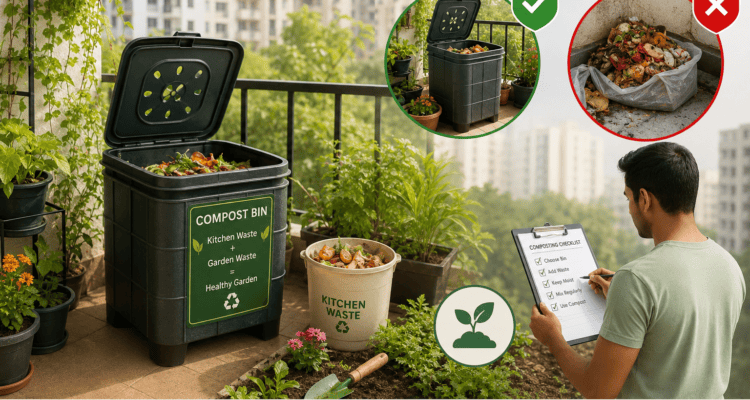
Do you throw kitchen waste in the dustbin every day? Stop right there. You need compost bin for kitchen waste. That waste can become free food for your plants. All you need is a good compost bin. In this guide, we will show you how to make a compost bin at home, which one to buy, and how to use it the right way. This guide is written for Mumbai homes, flats, and small balconies. But it will work for any home in India.
What Is a Compost Bin?
A compost bin is a container. You put kitchen waste and garden waste inside it. Over time, this waste breaks down. It turns into dark, crumbly soil. This soil is called compost. Compost is full of nutrients. Plants love it.
A compost bin can be a simple bucket. It can also be a branded home composter you buy online. Both work. The choice depends on your space, budget, and how much waste your home makes.
Why You Need a Compost Bin at Home
Many people ask, “Why should I compost at home?” Here are simple reasons:
- You reduce kitchen waste. Less waste goes to the garbage truck.
- You save money. You stop buying fertilizer every month.
- You get healthy plants. Homemade compost feeds your soil naturally.
- You help the environment. Food waste in landfills makes harmful gas. Composting stops this.
- It is easy. Once you set it up, it needs very little effort.
If you grow vegetables, flowers, or just a few pots on your balcony, a compost bin is one of the best things you can add to your home.
Types of Compost Bins for Home and Garden
There are many types of compost bins sold in India today. Here are the common ones:
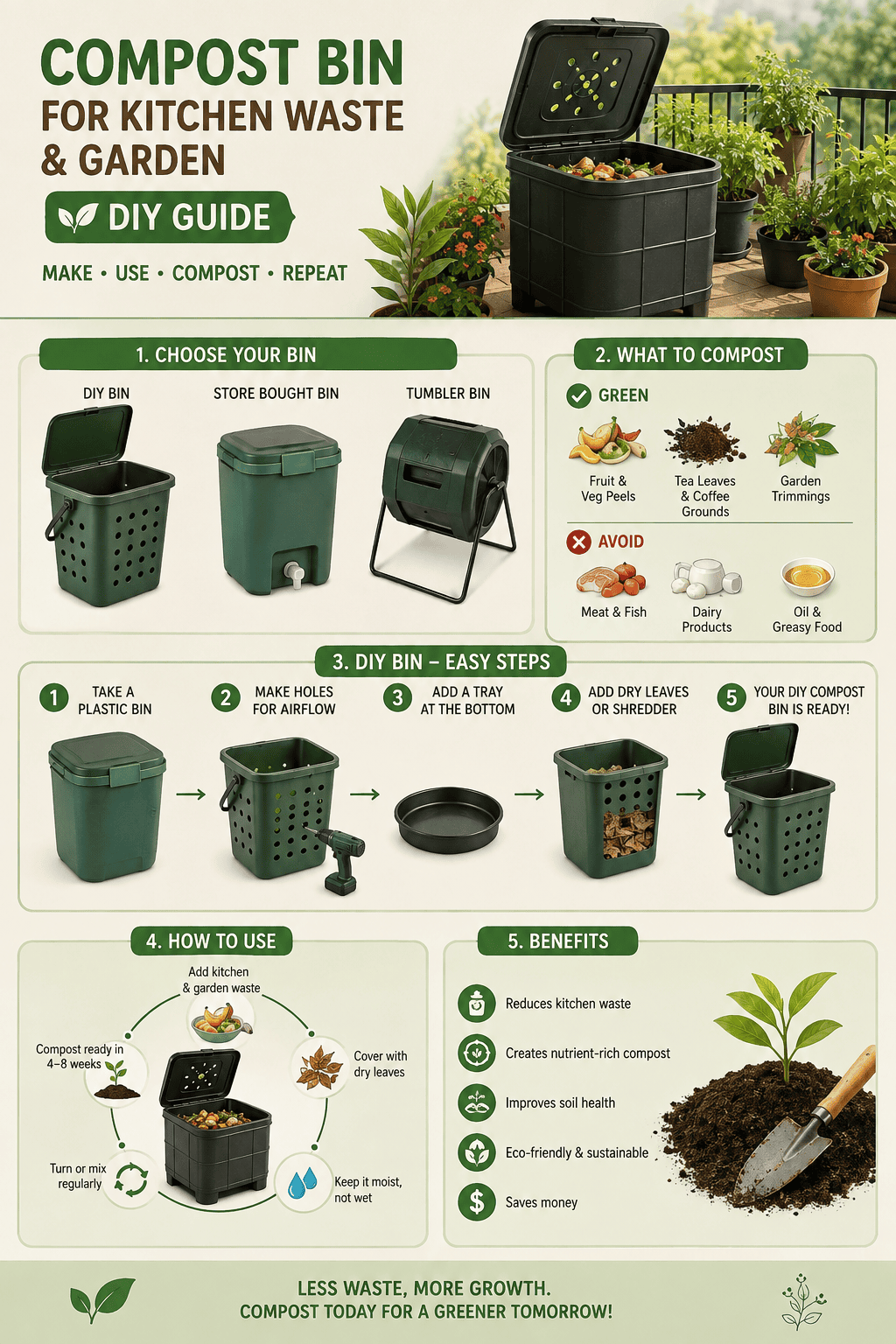
- Aerobic Compost Bin – This bin uses air to break down waste. It needs holes for airflow. This is the most popular choice for Indian homes.
- Bokashi Bin – This is a sealed bin. It uses a special powder to ferment waste. It does not need much air.
- Tumbler Compost Bin – This bin can be rotated. Rotating mixes the waste and speeds up composting.
- Terracotta Compost Pot – This is a clay pot. It is good for small balconies.
- DIY Bucket Compost Bin – This is a homemade bin. You can make it from an old bucket or drum.
If you don’t want to build one yourself, a ready-made bin saves time. This Compost Bin for Kitchen Waste – Home Composter (Aerobic) is a good choice for Mumbai flats. It is compact and made for daily kitchen waste.
How to Make a DIY Compost Bin at Home (Step by Step)
Many people search for “how to make a compost bin at home”. Here is a simple method using things you already have.
What You Need
- A plastic bucket, drum, or old dustbin with a lid
- A drill or a hot nail to make holes
- Some dry leaves, newspaper, or cardboard
- Kitchen waste
Steps
- Take a bucket or drum. Any size works. A 15 to 20 litre bucket is good for a small family.
- Make holes. Drill small holes on the sides and bottom. This lets air in and extra water drain out. Air is very important for good compost.
- Add a layer of dry material. Put dry leaves, newspaper pieces, or cardboard at the bottom. This is called “brown waste”.
- Add kitchen waste. Add fruit peels, vegetable scraps, and tea leaves. This is called “green waste”.
- Keep layering. Every time you add kitchen waste, cover it with a little dry material. This stops smell and flies.
- Add compost starter (optional). A handful of old compost, garden soil, or Ugaoo Organic Vermicompost will speed up the process.
- Mix once a week. Turn the waste with a stick or trowel. This adds air and speeds up breakdown.
- In four to eight weeks, your waste will turn into dark, soil-like compost.
This DIY compost bin method costs almost nothing. It is perfect if you want to try composting before buying a branded compost bin.
What Waste You Can Put in a Compost Bin
People often get confused about what goes into a compost bin. Here is a simple list.
Green waste (wet waste): – Vegetable peels – Fruit peels – Tea leaves and coffee grounds – Eggshells – Leftover rice or dal (in small amounts)
Brown waste (dry waste): – Dry leaves – Newspaper (torn into pieces) – Cardboard – Dry twigs – Sawdust
A good compost bin needs both green and brown waste. Too much green waste alone will smell bad. If your brown waste is low, you can add a growing medium like Ugaoo Cocopeat Block to balance moisture and add bulk.
What You Should NOT Put in a Compost Bin
Avoid these items in your home compost bin:
- Cooked food with oil or spice
- Meat, fish, or bones
- Dairy products
- Plastic, glass, or metal
- Pet waste
- Diseased plant leaves
Adding these will slow down composting. They also attract pests and cause bad smell.
How to Use Your Compost Bin the Right Way
Once you have a working compost bin, follow these simple rules for best results.
1. Keep the Right Balance
Use about two parts brown waste to one part green waste. This keeps the smell down and speeds up decomposition.
2. Keep It Moist, Not Wet
Your compost should feel like a damp sponge. Too dry, and it will not break down. Too wet, and it will smell. Use a Garden Spray Pump to add a light mist of water if the mix looks dry.
3. Turn It Often
Mixing the compost adds oxygen. This helps good bacteria work faster. Turn your compost bin at least once a week.
4. Cut Waste into Small Pieces
Big pieces take longer to break down. Chop vegetable peels and stems into small parts before adding them. A sharp Garden Plant Cutter works well for chopping tough garden waste and dry stems too.
5. Add a Compost Booster
If you want faster results, add a scoop of Ugaoo Organic Vermicompost or TrustBasket Neem Cake Powder. Neem cake also keeps pests away from your compost bin.
6. Know When Compost Is Ready
Your compost is ready when it turns dark brown, smells earthy, and looks crumbly like soil. This usually takes four to eight weeks, depending on the season and how often you turn it.
7. Use It in Your Garden
Mix the finished compost into your pots or garden soil. You can also blend it with TrustBasket Organic Potting Soil Mix before repotting your indoor and outdoor plants.
Ready-Made Compost Bin vs DIY Compost Bin: Which Is Better?
| Point | DIY Compost Bin | Ready-Made Compost Bin |
|---|---|---|
| Cost | Very low | Medium to high |
| Setup time | 10 minutes | Ready to use |
| Looks | Basic | Neat and clean |
| Smell control | Depends on you | Better airflow design |
| Best for | Beginners, tight budget | Long-term daily use |
If you are just starting out, a DIY compost bin is a great way to learn. Once you know you enjoy composting, upgrading to a proper Home Composter (Aerobic) makes daily use much easier, especially in small Mumbai kitchens.
Best Compost Bin and Composting Products to Buy Online in India
Here is a quick list of trusted products to build your own home composting kit.
- Compost Bin for Kitchen Waste – Home Composter (Aerobic) — the main bin for your kitchen waste
- Ugaoo Organic Vermicompost (Value Pack) — natural compost starter and plant food
- Ugaoo Cocopeat Block — balances moisture in your compost bin
- TrustBasket Neem Cake Powder — keeps pests away and adds nutrients
- SJ Organics Garden Spray Pump — for light watering of your compost
- Kraft Seeds Garden Plant Cutter — chop waste into smaller pieces
- Medium Size Heavy Duty Kitchen Dustbin Bags — for segregating dry waste separately
- TrustBasket Organic Potting Soil Mix — mix with finished compost for repotting
Common Compost Bin Problems and How to Fix Them
Problem: My compost bin smells bad. Fix: Add more dry brown waste like dry leaves or newspaper. Also check if you added meat, oil, or dairy by mistake.
Problem: I see fruit flies around my compost bin. Fix: Always cover fresh kitchen waste with a layer of dry material. Keep the lid closed when not adding waste.
Problem: My compost is too wet. Fix: Add more dry material and stop adding liquid waste for a few days. Leave the lid slightly open for airflow.
Problem: My compost is taking too long. Fix: Turn it more often. Chop waste into smaller pieces. Add a handful of vermicompost to introduce helpful microbes.
Problem: I don’t have outdoor space for a big compost bin. Fix: Use a small compact aerobic composter made for balconies and kitchens. It fits under a sink or in a kitchen corner.
Compost Bin for Small Flats and Balconies in Mumbai
Most homes in Mumbai are flats with limited space. You don’t need a big garden to compost. A small compost bin fits neatly on a kitchen platform, balcony corner, or utility area. Choose a compact aerobic bin with a tight lid to control smell in humid Mumbai weather. Empty and turn it regularly, since Mumbai’s heat and humidity speed up decomposition compared to cooler regions.
Frequently Asked Questions
Can I make a compost bin at home without buying anything? Yes. An old bucket or plastic drum with holes works well as a simple DIY compost bin.
How long does it take to make compost at home? It usually takes four to eight weeks, depending on the waste mix, weather, and how often you turn it.
Is compost bin smell a problem in a flat? Not if you manage it well. Cover green waste with dry material and keep the lid closed. A good aerobic bin controls smell much better than an open pile.
What is the difference between compost and vermicompost? Compost is made by natural bacteria breaking down waste. Vermicompost is made using earthworms, which speeds up the process and adds extra nutrients.
Can I use compost for indoor plants? Yes. Mix finished compost with potting soil in a small ratio, around one part compost to three parts soil, before using it for indoor pots.
Final Thoughts
A compost bin is one of the simplest ways to make your home greener. Whether you build a DIY compost bin from an old bucket or buy a ready-made home composter, the result is the same: less waste, healthier plants, and a happier garden. Start small, stay consistent, and your kitchen waste will soon turn into food for your plants.
Ready to start? Browse our full range of composting and fertilizer products and waste management essentials to build your home composting kit today.

Akhilesh Maurya
Administrator at Farmer In Mumbai
- 15 Best Microgreens To Grow At Home In Your Balcony : A DIY guide
- How to Start an Areca Leaf Plate Making Business in India (2026 Guide)
- 12 Indoor Vastu Plants for Home in Mumbai With Direction And Pot Guide
- 10 Private Terrace Garden Ideas For Mumbai, Navi Mumbai And Thane Residents With Rules And Regulations
- How to Make Self Watering Pots at Home : 3 Easy DIY Methods
- How To Use Cocopeat For Plants : A Complete DIY Guide
- Balcony Garden Rules And Regulations In Mumbai Housing Societies
- Laid Off or Burned Out? 6 Small Garden Business Ideas You Can Start For Under ₹15,000
- Get Pesticide Free Vegetables Near Me in Mumbai: How to Verify Before You Buy
- 7 DIY Methods To Get Rid Of Mealybugs On Plants Naturally
- 10 Plants For North Facing Balcony In Mumbai, Thane And Navi Mumbai High Rise Buildings
- Best Soil Mix for Indoor Plants in Mumbai: A Plant-by-Plant Guide