
Do you hear scratching sounds at night? You need to get rid of rats in your garden and home. Do you see small droppings near your kitchen or garden? You may have rats. Don’t worry. You are not alone.
Rats are a big problem all over the world. From small towns to big cities, from cold countries to hot countries, rats find a way into our homes and gardens. They eat our food. They damage our plants. They can even make us sick.
The good news is, you can fight back. You do not need to call an expert right away. You do not need harsh chemicals. You can use simple, cheap, and safe DIY methods. This guide will show you exactly how.
| Quick fact: One pair of rats can produce over 200 baby rats in just one year. This is why fast action matters. |
Disclosure: This guide links to a few helpful products on our shop page. We are an Amazon Affiliate Partner and may earn a small commission on qualifying purchases, at no extra cost to you.
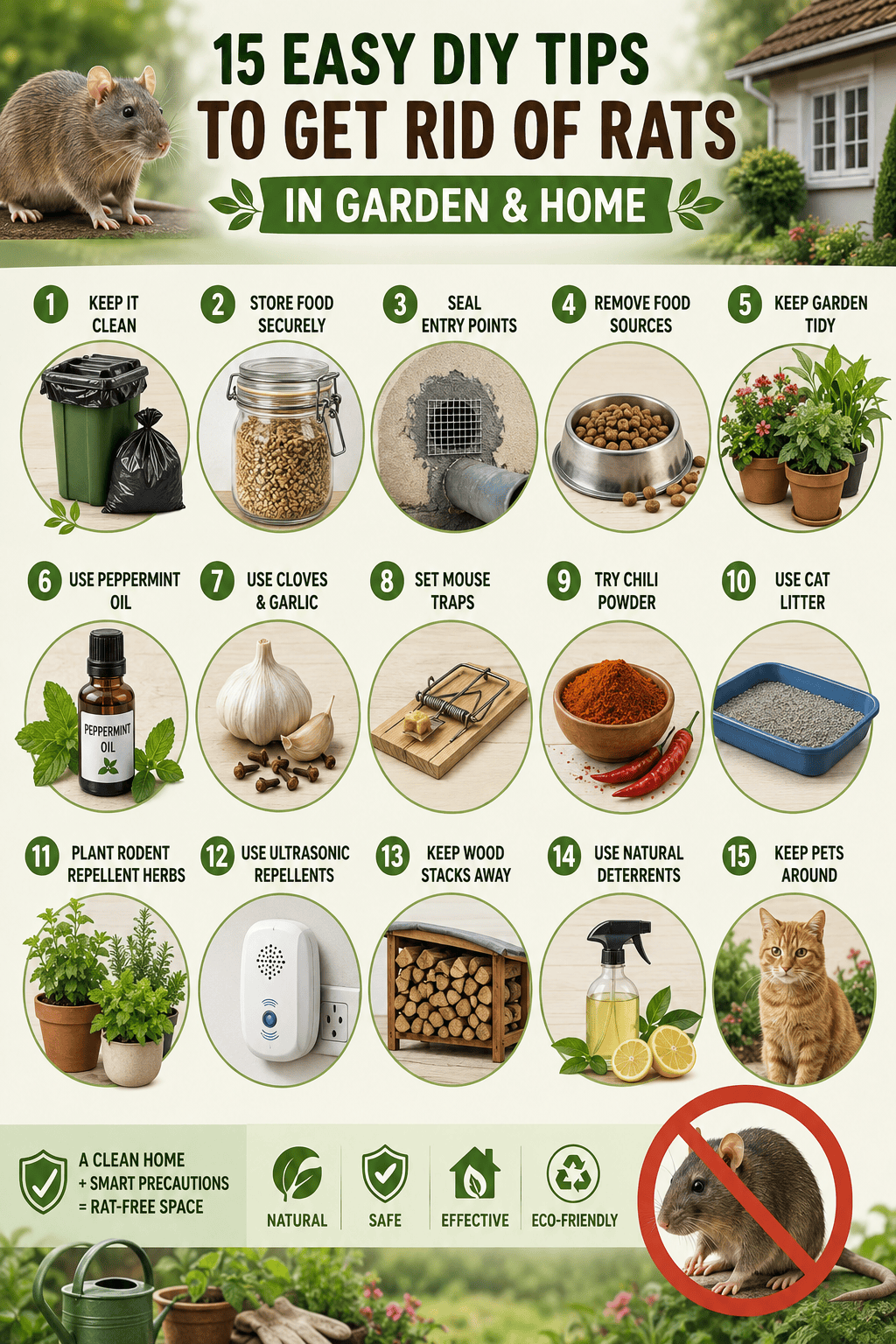
Why Do Rats Come Into Your Home and Garden?
Rats are smart animals. They go where life is easy. They look for three simple things:
- Food – Open food, pet food, bird seed, fruits, and vegetables.
- Water – Leaky pipes, pet water bowls, and damp compost.
- Shelter – Piles of wood, thick bushes, compost bins, and small gaps in walls.
If your home or garden gives them these three things, rats will move in fast. The first step to stop rats is to remove what attracts them.
Signs You Have a Rat Problem
Before you start, check for these common signs:
- Small dark droppings near food or walls.
- Scratching or running sounds at night, mostly in the ceiling or walls.
- Gnaw marks on wood, plastic, or wires.
- Small holes in the ground near walls, sheds, or compost bins.
- A strong, bad smell, like ammonia, in closed spaces.
- Greasy dark smudge marks along walls, where rats travel again and again.
If you see two or more of these signs, it is time to act.
15 Easy DIY Tips to Get Rid of Rats
These tips work for homes and gardens in any country. You do not need special tools. Most items are already in your kitchen or hardware store.
A. Tips to Remove What Attracts Rats
Tip 1: Store food in sealed containers.
Do not leave food open, even for one night. Use metal or thick plastic boxes with tight lids. This is true for human food, pet food, and bird seed.
Tip 2: Clean up fallen fruits and vegetables.
If you grow fruits or vegetables, pick them up as soon as they fall or ripen. Do not let food sit on the ground. This removes an easy meal for rats.
Tip 3: Take out the trash often.
Use trash cans with tight lids. Empty them often, and never leave food waste open overnight. Strong, tear-proof bags make this easier, since rats can chew through thin, weak plastic.
| 🛒 Recommended product: Medium Size Heavy Duty Kitchen Dustbin Garbage Bags Heavy-duty bags hold up better against chewing and tearing than thin ones. |
Tip 4: Fix leaking pipes and taps.
Rats need water every day. A small leak can be enough for them to survive. Fix leaks fast, both inside and outside your home.
Tip 5: Manage your compost bin the right way.
Never add meat, fish, dairy, or cooked food to compost. Turn your compost pile every few days. Use a bin with a solid base and a tight lid. This keeps rats from nesting inside.
| 🛒 Recommended product: Compost Bin for Kitchen Waste – Home Composter (Aerobic) A closed, aerobic composter is much harder for rats to get into than an open pile. |
B. Tips to Block Rats From Entering
Tip 6: Seal small holes and gaps.
Rats can enter through a gap as small as 1 to 2 centimetres, about the size of a coin. Check your walls, doors, and pipes. Fill gaps with steel wool, then cover with cement or metal sheets. Rats cannot chew through steel wool.
Tip 7: Use wire mesh around compost bins and garden beds.
Line the base of your compost bin or raised garden bed with strong wire mesh. This stops rats from digging in from below.
Tip 8: Trim plants and clear clutter.
Rats like to hide in thick bushes, tall grass, and piles of wood or leaves. Cut back plants near your home. Remove piles of junk in the garden. This takes away their hiding spots.
Tip 9: Keep a gap between your garden and your house wall.
Do not let plants touch your outside walls. A small gap, even 20 to 30 centimetres, makes it harder for rats to move from the garden into your home.
C. Natural and Safe Rat Repellents
Tip 10: Use peppermint oil.
Rats hate the strong smell of peppermint. Soak cotton balls in peppermint oil, or use ready-made peppermint pouches. Place them near holes, corners, and entry points. Replace them every few days.
| 🛒 Recommended product: Peppermint Oil Rat Repellent Pills Ready-to-use peppermint pills save you the mess of soaking cotton balls yourself. Also handy for cars and garages, where rats often chew wires. |
Tip 11: Try a mix of water and white vinegar.
Rats dislike the sharp smell of vinegar. Mix equal parts water and vinegar in a spray bottle. Spray it near rat paths, holes, and corners.
Tip 12: Plant mint around your garden edges.
Fresh mint plants give off a smell that rats do not like. Grow mint near walls, fences, or garden borders as a natural, long-term barrier.
Tip 13: Use a homemade pepper spray.
Mix crushed hot pepper or cayenne pepper powder with water. Spray it around plants and entry points. The strong smell keeps rats away without harming your plants.
D. Traps and Extra Help
Tip 14: Set humane traps.
If you already have rats, use humane live traps. Place them along walls, near droppings, or close to their nesting spot. Check the trap every day. Release the rat far away from your home.
Tip 15: Get a cat, or use a motion-activated deterrent.
A cat is a natural rat deterrent in many homes. If you cannot keep a cat, try an ultrasonic or motion-activated device. These give off sound or light that rats do not like.
Tip 16: For a bigger infestation, use a bait product.
If DIY steps alone are not enough, a ready-made bait cake can help control a larger outdoor or home infestation. Always place bait in areas away from children and pets, ideally inside a covered bait station.
| 🛒 Recommended product: Mortein Rat Kill Cake for Home, Car and Outdoor Rodent Control Works for home, outdoor areas, and even parked cars where rats like to hide. |
Tip 17: Don’t forget your garage, shed, or parked car.
Rats often chew through wiring in cars and garden sheds, especially when the vehicle is parked for a few days. A rat-repellent spray around the engine bay and shed corners can stop costly damage before it starts.
| 🛒 Recommended product: MOTUL Rat Repellent Spray (Engine & Wiring Protection) A quick spray around the engine bay and wiring helps protect parked cars and garden sheds from chewing damage. |
A Note for Different Climates and Seasons
Rats behave a little differently around the world, but the basic rules stay the same.
- In wet or rainy seasons, rats move indoors to stay dry. Check entry points more often during heavy rain.
- In cold winter areas, rats look for warm shelter, like garages, sheds, and wall spaces. Seal gaps before winter starts.
- In hot, dry areas, rats look for water more than food. Fix leaks and remove standing water first.
No matter where you live, the same three steps always help: remove food, block entry, and use natural repellents.
Safety Tips Before You Start
- Wear gloves when you clean up droppings or nesting material.
- Do not touch dead rats with bare hands.
- Keep DIY sprays and oils away from small children and pets.
- Wash your hands well after any cleanup near rat areas.
- If you find a large infestation, or your DIY methods do not work after two to three weeks, call a professional pest control service.
Final Thoughts
Rats are a common problem, but they are not impossible to solve. With simple daily habits, a few home items, and a little patience, you can protect your home and garden.
Start today. Remove open food. Seal one small gap. Try one natural repellent. Small steps, done often, bring big results.
| Remember: A clean, sealed, and well-managed home or garden is the best long-term rat control there is. |
Frequently Asked Questions
1. What smell keeps rats away naturally?
Rats dislike strong smells like peppermint oil, vinegar, and mint plants. These are safe, natural options for homes and gardens.
2. How do I know if I have rats or mice?
Rat droppings are bigger, about the size of a grain of rice or larger. Rats also leave bigger gnaw marks and larger footprints than mice.
3. Can rats in my garden harm my vegetables?
Yes. Rats can eat and damage fruits, vegetables, and seedlings. Always wash garden produce well before eating it.
4. How long does DIY rat control take to work?
Most DIY methods show results within one to two weeks. For bigger infestations, it may take three to four weeks of steady effort.
5. Is it safe to use these tips around pets and children?
Most tips in this guide, like sealing gaps, cleaning food, and using mint or vinegar, are safe. Always keep sprays and oils out of reach of small children and pets.
Shop This Guide
All the products mentioned in this guide, in one place:
- Medium Size Heavy Duty Kitchen Dustbin Garbage Bags
- Compost Bin for Kitchen Waste – Home Composter (Aerobic)
- Peppermint Oil Rat Repellent Pills
- Mortein Rat Kill Cake for Home, Car and Outdoor Rodent Control
- MOTUL Rat Repellent Spray (Engine & Wiring Protection)
Browse more solutions in our Pest & Insect Control category, or see the full Farmer In Mumbai shop for more home and garden essentials.

Akhilesh Maurya
Administrator at Farmer In Mumbai
- 15 Best Microgreens To Grow At Home In Your Balcony : A DIY guide
- How to Start an Areca Leaf Plate Making Business in India (2026 Guide)
- 12 Indoor Vastu Plants for Home in Mumbai With Direction And Pot Guide
- 10 Private Terrace Garden Ideas For Mumbai, Navi Mumbai And Thane Residents With Rules And Regulations
- How to Make Self Watering Pots at Home : 3 Easy DIY Methods
- How To Use Cocopeat For Plants : A Complete DIY Guide
- Balcony Garden Rules And Regulations In Mumbai Housing Societies
- Compost Bin For Kitchen Waste And Garden : A DIY Guide to Make, Buy and Use It
- Laid Off or Burned Out? 6 Small Garden Business Ideas You Can Start For Under ₹15,000
- Get Pesticide Free Vegetables Near Me in Mumbai: How to Verify Before You Buy
- 7 DIY Methods To Get Rid Of Mealybugs On Plants Naturally
- 10 Plants For North Facing Balcony In Mumbai, Thane And Navi Mumbai High Rise Buildings