
Mumbai gardeners can take help of cockroach repellent plants and mosquito repellent plants. Mumbai’s warm, humid climate is perfect for plants — and unfortunately, just as perfect for cockroaches and mosquitoes. Standing water after monsoon showers, humid drains, and warm apartment corners give pests everywhere to breed. Before you reach for another chemical spray, it’s worth knowing that several common houseplants genuinely repel — or at least strongly discourage — mosquitoes and cockroaches, simply by the compounds in their leaves.
This guide lists 10 plants proven to repel cockroaches or mosquitoes, tells you exactly which insect each one targets, where in a Mumbai home or balcony to place it for maximum effect, and how to keep it alive in our monsoon-heavy, high-humidity conditions.
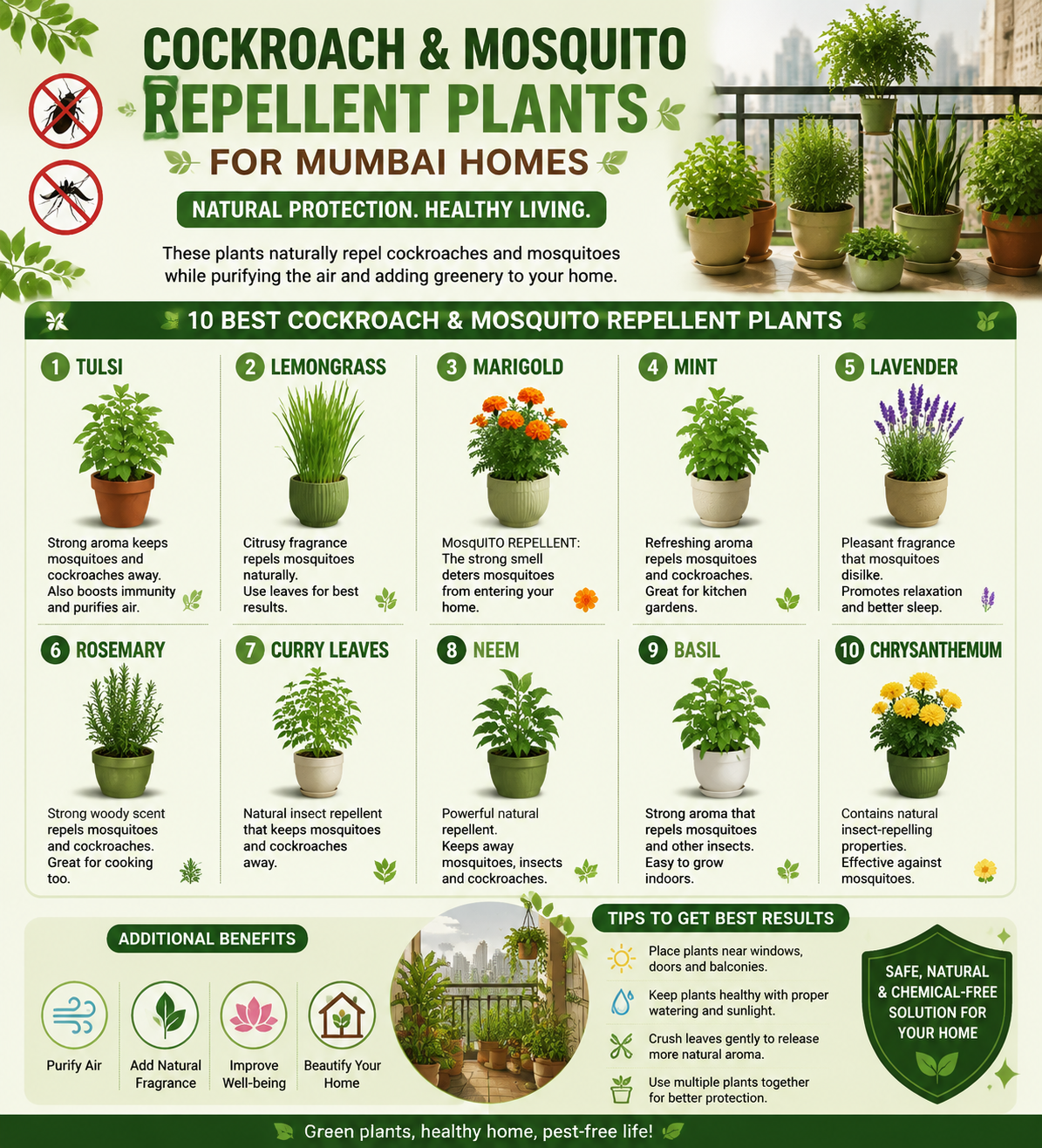
Why Plants Actually Work as Insect Repellents
Most repellent plants work through essential oils and volatile compounds in their leaves — citronellal, linalool, pyrethrins, and similar chemicals that insects find overwhelming or toxic in concentration, but that are harmless (often pleasant) to humans. Crushing or brushing the leaves releases more of the oil, which is why several plants on this list work best when placed somewhere you’ll brush past them — a doorway, a window ledge, near where you sit in the evening.
Plants won’t clear an existing infestation on their own, but as a preventive, chemical-free layer — especially combined with basic hygiene (no standing water, sealed food, clean drains) — they make a real difference in Mumbai homes.
Mosquito Repellent Plants
1. Citronella (Cymbopogon nardus)
Effective against: Mosquitoes (the same plant citronella oil and candles are derived from)
Citronella grass is the single most effective mosquito-deterrent plant you can grow. It releases its geraniol and citronellal oils constantly, and even more when the leaves are brushed.
Where to place it: Directly outside your main door, near the balcony railing, or beside a window that stays open in the evening — mosquitoes typically enter through these points at dusk.
Care tips: Needs at least 4-6 hours of sun, so it’s better suited to south or west-facing balconies. Water when the top inch of soil is dry; citronella dislikes waterlogged roots, which is a real risk in Mumbai’s monsoon — use a pot with wide drainage holes.
2. Lemongrass (Cymbopogon citratus)
Effective against: Mosquitoes
A cousin of citronella with a milder but still effective citronellal content. It’s also useful in the kitchen (teas, cooking), making it a dual-purpose plant.
Where to place it: Near the kitchen window or balcony edge — the strong citrus smell when brushed keeps mosquitoes from lingering near openings.
Care tips: Thrives in Mumbai’s warmth and humidity. Trim stalks regularly to encourage bushier growth and stronger oil concentration; cut stalks can be used fresh in the kitchen.
3. Tulsi / Holy Basil (Ocimum tenuiflorum)
Effective against: Mosquitoes (particularly effective against mosquito larvae in stagnant water)
Beyond its religious significance in most Mumbai homes, tulsi contains compounds that repel adult mosquitoes and have been shown to disrupt larval development in standing water nearby.
Where to place it: The traditional tulsi vrindavan spot near the entrance or in a courtyard works perfectly — it’s usually already near the door, which is exactly where you want a mosquito deterrent.
Care tips: Needs direct sunlight for at least 5-6 hours and doesn’t like “wet feet” — let soil dry between waterings, especially important during Mumbai’s humid monsoon months.
4. Marigold (Tagetes)
Effective against: Mosquitoes and several garden pests
Marigold roots secrete a compound that repels soil pests, while the flower’s strong scent keeps mosquitoes and aphids away from nearby plants — commonly used as a companion plant in Mumbai kitchen gardens for this reason.
Where to place it: Along balcony railings or at the base of your vegetable pots — it doubles as pest protection for your other plants.
Care tips: Needs full sun and well-draining soil. Deadhead spent flowers regularly to keep it blooming (and repelling) continuously through the season.
5. Peppermint (Mentha piperita)
Effective against: Mosquitoes, and it also deters ants
The menthol in peppermint is a strong mosquito repellent — strong enough that crushed leaves can be rubbed directly on skin in a pinch.
Where to place it: Near seating areas on the balcony or terrace, where you’ll brush against it in the evening when mosquitoes are most active.
Care tips: Peppermint spreads aggressively — grow it in its own pot rather than a shared planter. It tolerates partial shade well, making it a good fit even for balconies that don’t get full sun all day.
6. Catnip (Nepeta cataria)
Effective against: Mosquitoes
Research has found catnip’s active compound, nepetalactone, to be several times more effective at repelling mosquitoes than DEET in some studies — though the effect is strongest when the leaves are bruised or crushed.
Where to place it: Near the main seating area of a terrace or balcony where family gathers in the evening.
Care tips: Prefers partial sun and moderate watering. If you have cats, keep the pot somewhere they can’t reach — cats are famously drawn to it.
Cockroach Repellent Plants
7. Mint (Mentha spp.)
Effective against: Cockroaches (as well as mosquitoes, per above)
Cockroaches strongly dislike the smell of mint. Crushed mint leaves, or even mint essential oil placed near entry points, are a known deterrent.
Where to place it: Near the kitchen window, behind the sink, or close to the main door — the most common cockroach entry and hiding points in Mumbai flats.
Care tips: Like peppermint, mint spreads fast — use a dedicated pot, and pinch the tips regularly to keep it bushy and release more oil into the air.
8. Bay Leaf Plant (Laurus nobilis)
Effective against: Cockroaches
Bay leaves contain compounds cockroaches find repellent even when dried — a crushed bay leaf near cabinets is an old, effective trick, but a live plant continuously releases the scent.
Where to place it: A pot near the kitchen entrance or on a windowsill close to storage cabinets works best, since kitchens are the primary cockroach zone in most Mumbai homes.
Care tips: Prefers bright, indirect light and doesn’t like sitting in wet soil — let it dry out between waterings, which also suits Mumbai’s already-humid indoor air.
9. Lavender (Lavandula)
Effective against: Cockroaches, moths, and mosquitoes
Lavender’s strong floral scent — pleasant to humans, overwhelming to insects — makes it one of the few plants effective against multiple pest types at once.
Where to place it: Near wardrobes, storage units, or the entrance to the kitchen. It’s one of the better options for indoor placement since it doesn’t need to be brushed to release scent.
Care tips: Lavender struggles in high humidity and needs excellent drainage — this is the trickiest plant on the list for Mumbai. Use a terracotta pot with a cactus/succulent soil mix, place it in the sunniest, most airflow-friendly spot you have, and avoid overwatering at all costs.
10. Eucalyptus (Eucalyptus globulus)
Effective against: Cockroaches and mosquitoes
Eucalyptus oil (specifically citriodiol, from lemon eucalyptus varieties) is registered as an effective mosquito repellent, and the strong scent also deters cockroaches from nesting nearby.
Where to place it: Near balcony entry points or a terrace corner — it grows larger than most plants on this list, so it needs more open space rather than a tight kitchen windowsill.
Care tips: Needs full sun and a large pot, since eucalyptus grows quickly. It’s more drought-tolerant than most plants here, so let the soil dry out significantly between waterings.
General Tips for Making Repellent Plants Work Harder in Mumbai Homes
- Brush the leaves as you pass. Most of these plants release oils when disturbed — a quick brush of the hand each time you walk past a mint or peppermint pot noticeably increases the repellent effect.
- Group plants near entry points, not scattered randomly. Mosquitoes and cockroaches mostly enter through doors, windows, and drain gaps — concentrate 2-3 plants near each entry point rather than spreading one plant per room.
- Combine with drainage and hygiene basics. No repellent plant will outcompete a clogged drain or standing water on the terrace — pair this list with our guide on stopping waterlogging in your Mumbai terrace or balcony garden.
- Watch for the humidity vs. root rot trade-off. Several of these plants (lavender, bay leaf, citronella) actually prefer drier soil than Mumbai’s humidity naturally provides — always check soil moisture by touch, not on a fixed schedule, and revisit our fungus and root rot treatment guide if you notice yellowing or mushy stems.
- Refresh essential-oil plants seasonally. Citronella, lemongrass, and mint lose potency as they age — propagate cuttings or repot with fresh soil every 6-8 months to keep oil concentration high.
- Indoor plants need occasional “fresh air time.” For bay leaf, lavender, and mint kept indoors near kitchens, an hour or two of balcony airflow each week reduces fungal risk without losing their repellent placement indoors.
- Don’t overcrowd small kitchens. In compact Mumbai flats, one well-placed mint or bay leaf pot near the entry point works better than several plants competing for the same windowsill light.
Final Thoughts
You don’t need to choose between a chemical-free home and a pest-free one. Placing citronella and tulsi near your entrance, mint and bay leaf near the kitchen, and lavender near storage areas gives you a genuinely effective, low-maintenance defence against Mumbai’s two most persistent pests — while adding greenery to spaces that need it.
If you’d rather skip the trial and error, browse our pest and insect control range or get in touch with our team — at Farmer In Mumbai, our philosophy is simple: Making Every Home A Garden, mosquitoes and cockroaches included in what we help you keep out.

Akhilesh Maurya
Administrator at Farmer In Mumbai
- 15 Best Microgreens To Grow At Home In Your Balcony : A DIY guide
- How to Start an Areca Leaf Plate Making Business in India (2026 Guide)
- 12 Indoor Vastu Plants for Home in Mumbai With Direction And Pot Guide
- 10 Private Terrace Garden Ideas For Mumbai, Navi Mumbai And Thane Residents With Rules And Regulations
- How to Make Self Watering Pots at Home : 3 Easy DIY Methods
- How To Use Cocopeat For Plants : A Complete DIY Guide
- Balcony Garden Rules And Regulations In Mumbai Housing Societies
- Compost Bin For Kitchen Waste And Garden : A DIY Guide to Make, Buy and Use It
- Laid Off or Burned Out? 6 Small Garden Business Ideas You Can Start For Under ₹15,000
- Get Pesticide Free Vegetables Near Me in Mumbai: How to Verify Before You Buy
- 7 DIY Methods To Get Rid Of Mealybugs On Plants Naturally
- 10 Plants For North Facing Balcony In Mumbai, Thane And Navi Mumbai High Rise Buildings