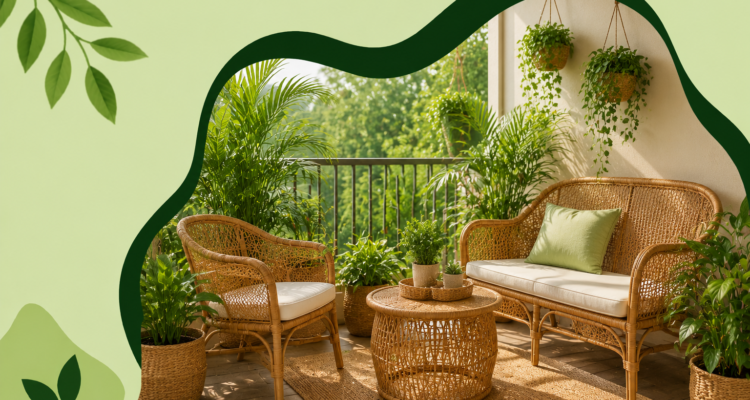
Cane furniture for balcony and terraces are must, and you should not ignore the utility of them. If you’ve spent months turning your balcony into a proper garden — pots of tulsi, money plants climbing the grill, maybe a couple of hibiscus doing their thing in the corner — the furniture you place in there matters more than people think. Wrong choice, and by August your “outdoor seating” is a swollen, moldy mess sitting in the corner of your utility area.
This guide is written specifically for Mumbai flats: compact balconies, larger terraces in Goregaon-style low-rise buildings, and everything in between. We’ll clear up the cane vs rattan confusion, tell you honestly what survives our humidity and monsoon, and help you pick furniture that actually works with a real, growing balcony garden — not just a showroom photo.
Cane vs Rattan: What’s the Actual Difference?
Almost every furniture site uses “cane” and “rattan” interchangeably, and honestly, in casual conversation, that’s fine. But if you’re spending money on outdoor furniture for a Mumbai balcony, the distinction actually matters for durability. In Mumbai, cane furniture online can be purchased from the following website :
Buy Cane Furniture Online On Amazon
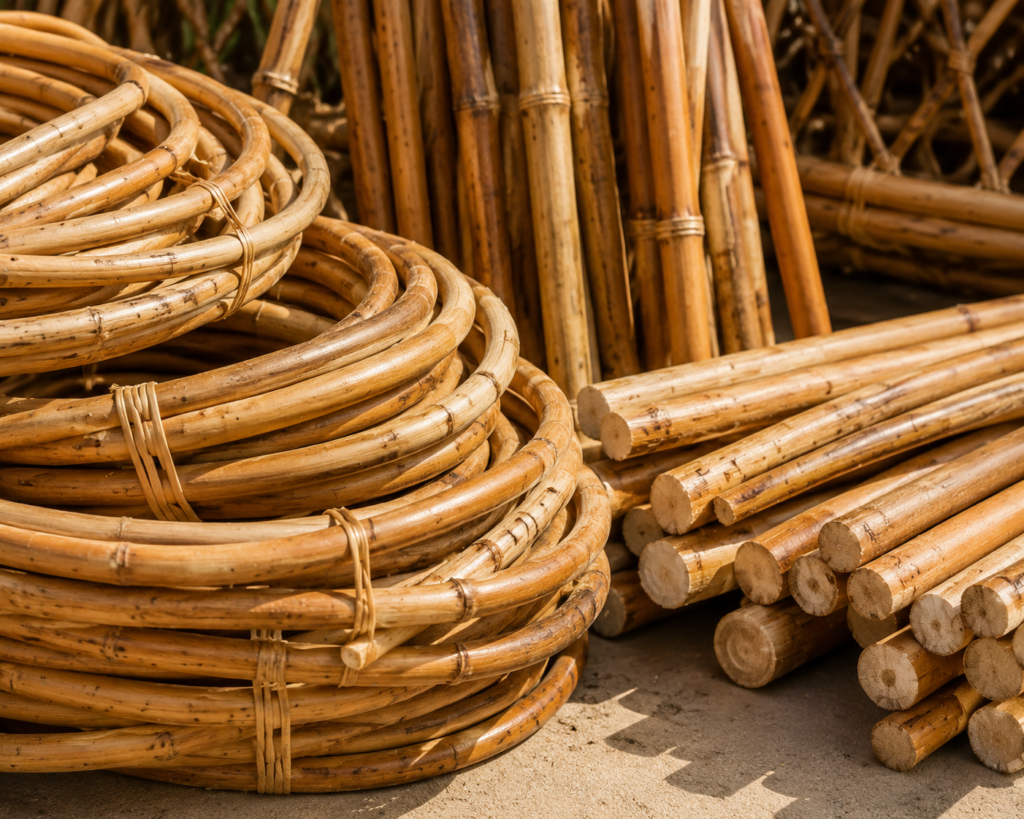
Rattan is a climbing palm — the solid vine itself. It’s strong, flexible, and used to build the actual frame or skeleton of a piece of furniture: the legs, the armrests, the structural bones of a chair or table.
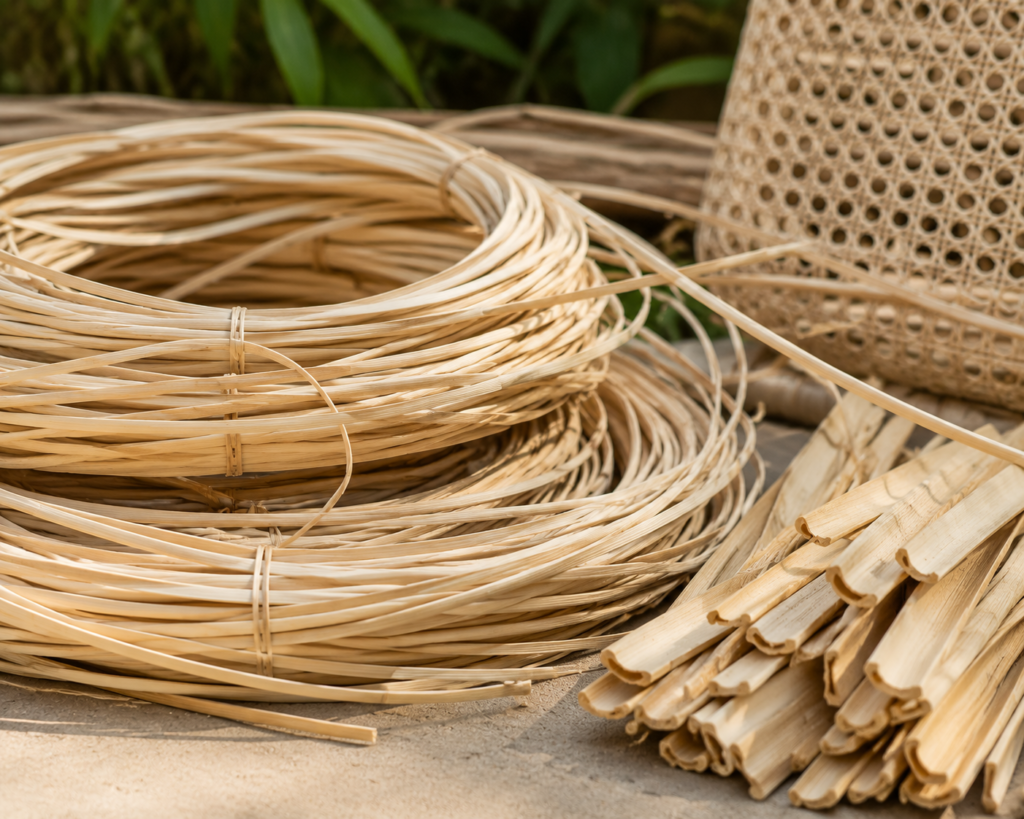
Cane is the outer skin peeled off that rattan vine. It’s thinner, more flexible, and gets woven into intricate patterns — the webbing you see on chair backs, seats, and decorative panels.
So in practice: a “rattan chair” usually means the whole structure — frame and weave — is built from rattan-based material. A “cane chair” might have a wooden or metal frame with a woven cane seat and back. Neither is inherently better; they’re just used differently depending on the piece.
What actually matters for your balcony: whether the material is natural or synthetic, not whether it’s labeled cane or rattan.
Natural vs Synthetic: The Question That Actually Decides Durability
This is the distinction that will save or ruin your furniture in a Mumbai monsoon.
Natural Cane/Rattan
- Genuine, handwoven, plant-based material
- Beautiful texture, warmer look, supports traditional artisan craft
- Needs to be kept in covered, shaded spaces — direct rain and harsh sun will crack, fade, or rot it over 1-2 monsoons
- Best for: covered balconies, indoor-outdoor spaces, terraces with a roof/shade cloth
- Needs periodic oiling/conditioning to prevent drying and cracking
Synthetic Rattan (PE Rattan / Resin Wicker)
- Machine-woven polyethylene fiber over an aluminum or powder-coated steel frame
- Designed specifically for outdoor and uncovered exposure
- UV-stabilized (won’t fade or go brittle in strong sun)
- Fully rain-resistant — won’t rot, swell, or grow mold
- Slightly less “authentic” look up close, but modern synthetic weaves are very convincing
- Best for: open terraces, uncovered balconies, anything that takes direct monsoon rain
Our honest take for Mumbai: if your balcony or terrace is even partially open to rain, go synthetic. Natural cane and rattan are gorgeous, but Mumbai’s combination of salt air (if you’re anywhere near the coast), Mumbai heavy monsoon rain, and intense summer UV is a tough environment for natural fiber. Save natural cane for a covered sit-out or bring it indoors during monsoon.
Why Cane and Rattan Suit Mumbai Balcony Gardens Specifically
A few reasons this furniture style pairs so well with a plant-filled balcony:
- Lightweight — easy to move around when you’re rearranging pots, watering, or dealing with monsoon prep. Wooden or wrought-iron furniture is a hassle to shift every time you need to reposition plants.
- Airy visual weight — cane and rattan don’t block light or visually crowd a small space the way solid wood or upholstered furniture does. Important when your balcony is already full of pots.
- Natural material pairs with greenery — the woven texture complements plants far better than glossy metal or plastic furniture.
- Compact footprint options — cane furniture comes in space-efficient designs (stackable stools, slim armchairs, foldable side tables) suited to Mumbai’s typically smaller balcony dimensions compared to bungalow gardens elsewhere.
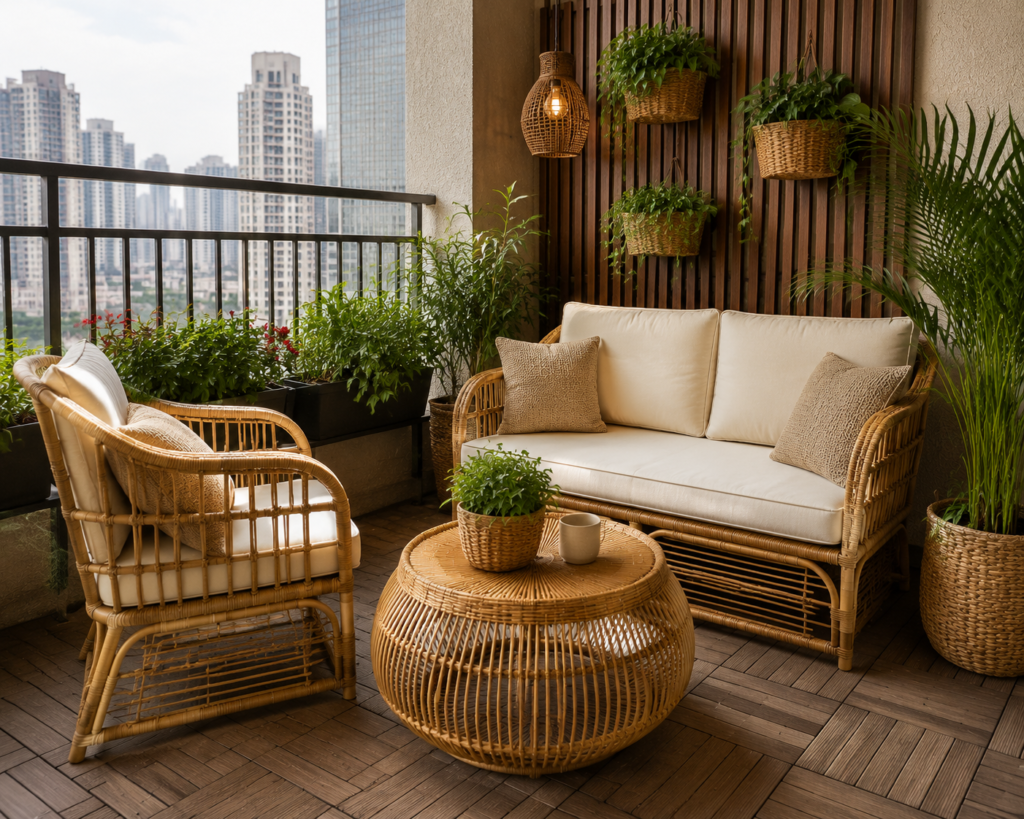
Choosing Furniture by Balcony/Terrace Size
Compact Balcony (Most Mumbai Flats, ~15-40 sq ft)
Don’t try to fit a full seating set. Prioritize:
- One or two cane/rattan armchairs (foldable if space is really tight)
- A small round side table for your chai/coffee
- Wall-mounted or corner shelving for pots instead of floor-standing planters, to free up floor space for furniture
Medium Balcony / Small Terrace (40-100 sq ft)
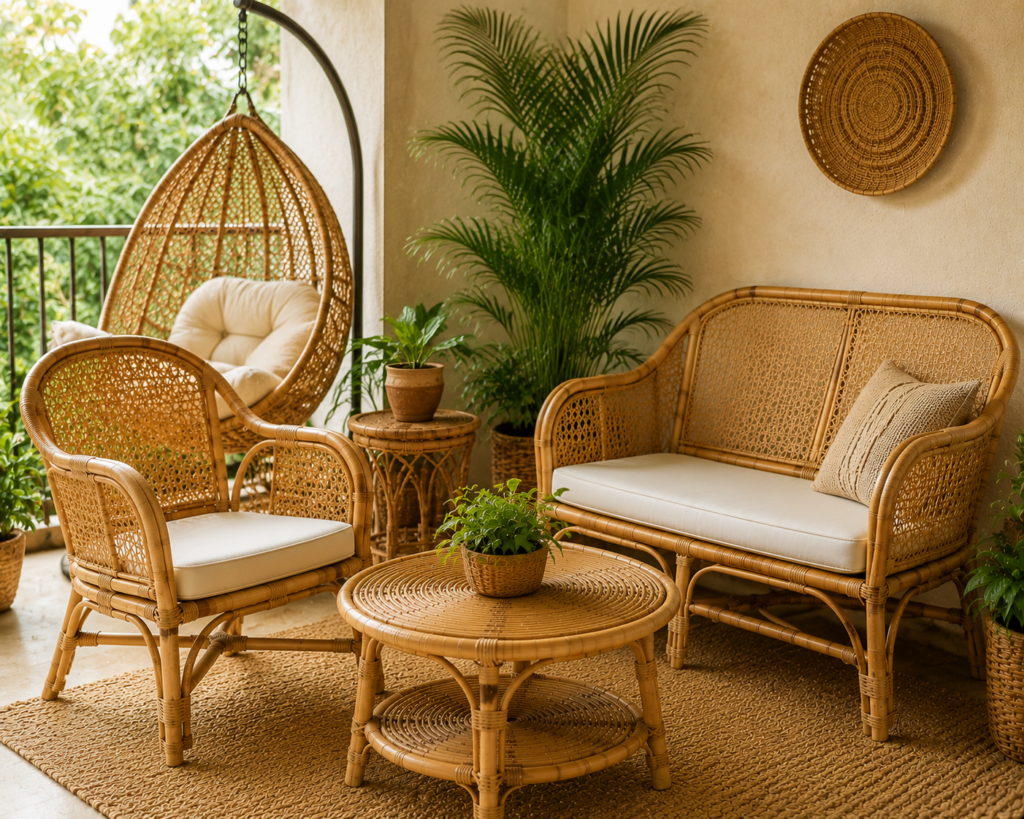
- A two-seater cane loveseat or a pair of lounge chairs
- A low coffee table
- Consider a hanging cane egg chair if your ceiling/grill structure supports it — great for smaller footprints since it doesn’t need floor clearance around it
Large Terrace (100+ sq ft, common in Mumbai-style low-rises and bungalows)
- A proper rattan sofa set (2-3 seater + armchairs + coffee table)
- A cane swing — genuinely one of the best terrace additions if you have the ceiling anchor point or a standing frame
- Dining-style cane furniture if you’re using the terrace for evening meals among your plants
- Leave clear pathways between furniture and pots — terraces get crowded fast once both furniture and a real plant collection are in place
Monsoon & Humidity Care Tips for Mumbai
Whichever you choose, these will extend the life of your furniture significantly:
- Cover it during heavy monsoon spells — even synthetic rattan benefits from a simple waterproof cover during the worst weeks (June-July), mainly to prevent water pooling in seat cushions.
- Never let cushions stay wet — this is the #1 cause of mold on outdoor furniture in Mumbai’s humidity. Use quick-dry outdoor cushion fabric, and stand cushions upright to dry after rain.
- Keep natural cane away from direct monsoon rain entirely — reposition it under an overhang or bring it inside during the season if your balcony isn’t covered.
- Wipe down after salt-laden sea breeze if you’re in a coastal-facing flat (Bandra, Worli, Colaba, Marine Drive belt) — salt residue speeds up degradation of both natural and synthetic weaves.
- Elevate furniture slightly off a constantly damp floor using small furniture pads or coasters, especially if your balcony floor doesn’t drain well.
- Oil natural cane every 6-8 months with furniture oil or coconut oil to stop it from drying and cracking in Mumbai’s summer heat.
Cane/Rattan Furniture and Your Plants: A Few Practical Notes
- Keep watering cans, drip trays, and hoses away from natural cane furniture — repeated water splashes will do more damage over time than one monsoon.
- If you’re growing climbers or trailing plants (money plant, morning glory) near a cane chair, make sure they’re not left resting directly against the weave — trapped moisture under leaves against furniture speeds up mold growth.
- Place taller potted plants (areca palm, bamboo) behind or beside seating rather than in walking paths — it creates a natural “living wall” backdrop for your furniture without them competing for the same floor space.
Frequently Asked Questions
Is rattan furniture good for Mumbai’s climate?
Synthetic (PE) rattan handles Mumbai’s humidity, heat, and monsoon well since it’s UV-stabilized and doesn’t absorb water. Natural rattan needs a covered space and more upkeep to survive our weather long-term.
Which lasts longer outdoors, cane or rattan?
This depends more on natural vs synthetic than on cane vs rattan specifically. Synthetic versions of either will always outlast natural fiber in an uncovered outdoor Mumbai balcony or terrace.
Can I keep cane furniture on an open, uncovered terrace?
Natural cane, not recommended for long-term uncovered exposure — it will degrade within a couple of monsoons. Synthetic rattan/cane-look furniture is built for exactly this situation.
How do I stop my balcony furniture from smelling musty in monsoon?
Keep cushions dry and stored indoors during the heaviest rain weeks, ensure furniture isn’t sitting in standing water, and allow airflow underneath by using small elevating pads.
What’s cheaper — natural cane or synthetic rattan?
Natural cane is often cheaper upfront but has a shorter outdoor lifespan and needs maintenance. Synthetic rattan costs more initially but needs far less upkeep and lasts significantly longer outdoors — usually the better long-term value for an actual balcony garden setup.

Akhilesh Maurya
Administrator at Farmer In Mumbai
- 15 Best Microgreens To Grow At Home In Your Balcony : A DIY guide
- How to Start an Areca Leaf Plate Making Business in India (2026 Guide)
- 12 Indoor Vastu Plants for Home in Mumbai With Direction And Pot Guide
- 10 Private Terrace Garden Ideas For Mumbai, Navi Mumbai And Thane Residents With Rules And Regulations
- How to Make Self Watering Pots at Home : 3 Easy DIY Methods
- How To Use Cocopeat For Plants : A Complete DIY Guide
- Balcony Garden Rules And Regulations In Mumbai Housing Societies
- Compost Bin For Kitchen Waste And Garden : A DIY Guide to Make, Buy and Use It
- Laid Off or Burned Out? 6 Small Garden Business Ideas You Can Start For Under ₹15,000
- Get Pesticide Free Vegetables Near Me in Mumbai: How to Verify Before You Buy
- 7 DIY Methods To Get Rid Of Mealybugs On Plants Naturally
- 10 Plants For North Facing Balcony In Mumbai, Thane And Navi Mumbai High Rise Buildings